Eco-Friendly Gift Ideas for Weddings and Meaningful Occasions
Gifting has always been a way of saying I see you, I care, I’m celebrating this moment with you.
But today, it comes with an extra layer of thoughtfulness.
More and more of us want our gifts to reflect not just affection, but also awareness – of the environment, of overconsumption, and of what truly adds value to someone’s life while not hurting our mother planet “Earth”.
Eco-friendly gifting was never about perfection or just ticking the “sustainability” boxes.
It’s about intention.
Choosing gifts that are useful, long-lasting, ethically made, or thoughtfully experienced – gifts that don’t end up forgotten in a cupboard or discarded after a season.
And most importantly, Gifts that are kind to the planet.
This guide was created to help you do exactly that.
Whether you’re choosing a wedding gift, an engagement present, a festive offering, or something for a milestone celebration, this article will walk you through eco-friendly gift ideas that feel generous, not restrictive.
We’ll explore what makes a gift truly sustainable, share practical ideas across different occasions, and gently highlight what to avoid – all without guilt or greenwashing.
To ensure that the most meaningful gifts are the ones that are chosen with care – for the people receiving them, and for the world we all share.
What Makes a Gift Truly Eco-Friendly? (Beyond the Label)
Not every product labeled “eco-friendly” actually is. And that’s not something most people realize until they’ve already bought the gift.
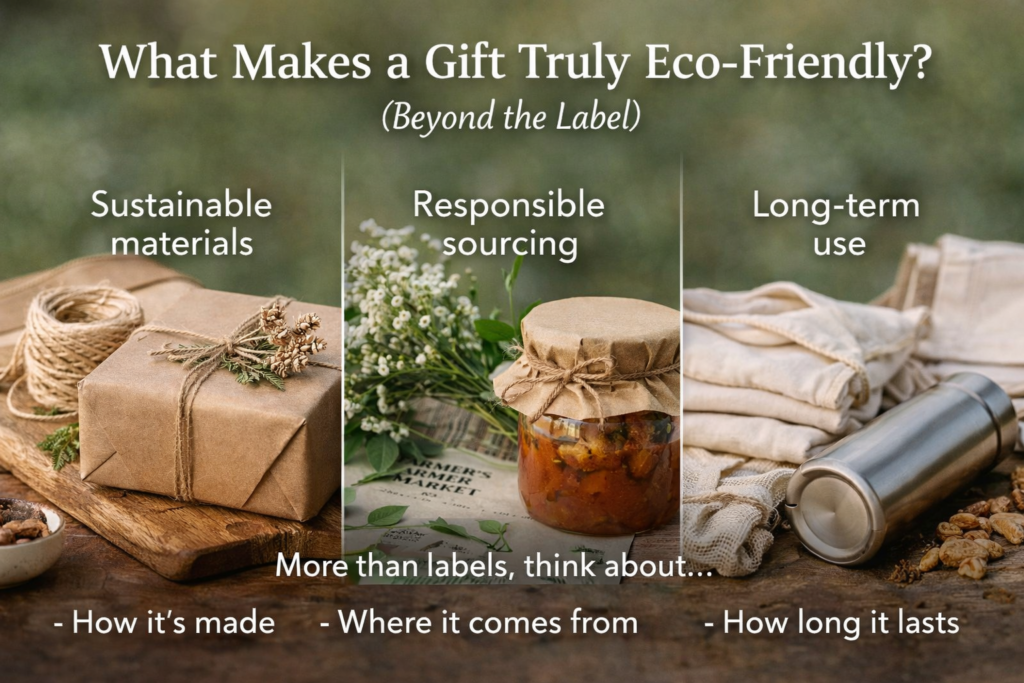
Sustainable gifting isn’t about finding the perfect item – it’s about understanding what truly makes a choice thoughtful and responsible.
At Team Plannersy, we encourage guests and couples to look beyond buzzwords and ask a few simple, honest questions.
Will This Gift Be Used – Not Just Admired?
One of the most sustainable things you can give is something that becomes part of everyday life.
A gift that:
- Is useful
- Fits naturally into someone’s routine
- Replaces a disposable or short-lived alternative
will always have more impact than something decorative that’s rarely touched.
Longevity matters more than novelty.
2. How Was It Made – and By Whom?
Eco-friendly gifting also means thinking about the people behind the product.
Look for gifts that are:
- Made by local artisans or small businesses
- Produced in small batches
- Ethically sourced and fairly made
When a gift supports craftsmanship and livelihoods, its value goes far beyond the object itself.
3. Is It Low-Waste or Reusable?
Sustainable gifts reduce waste either by design or by purpose.
This could mean:
- Items that can be reused for years
- Consumables that don’t leave behind plastic or excess packaging
- Products designed to replace single-use alternatives
The goal isn’t zero waste – it’s less waste.
4. Is the Packaging Thoughtful?
Sometimes the most wasteful part of a gift isn’t the gift – it’s the packaging.
Thoughtful packaging might include:
- Minimal or recyclable materials
- Cloth wraps, reusable boxes, or paper-based packaging
- No unnecessary layers just for presentation
A beautifully simple wrap often feels more intentional than elaborate packaging.
5. Does It Fit the Occasion and the Relationship?
A truly eco-friendly gift also respects context.
A meaningful wedding gift looks different from:
- A return gift
- A festive offering
- A corporate or formal present
Sustainability isn’t just environmental – it’s emotional. A gift that feels appropriate is far more likely to be valued and kept.
Eco-Friendly Wedding Gift Ideas (That Couples Will Actually Use and Appreciate)
When choosing a wedding gift, sustainability is not something unusual – first off all.
It’s about choosing something considered. A gift that fits into the couple’s everyday life & reflects care.
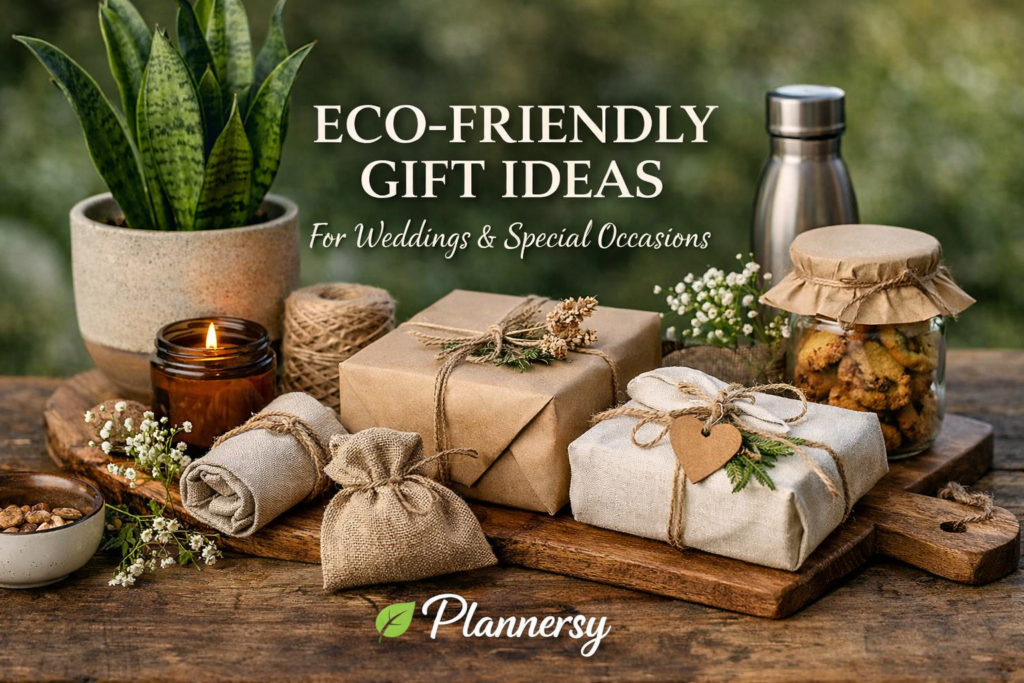
At Team Plannersy, we encourage guests to think in terms of usefulness, longevity, and intention. Here are eco-friendly wedding gift ideas that consistently strike that balance.
1. Experience-Based Wedding Gifts
Experience gifts are among the most sustainable options because they don’t create physical waste – yet they often become the most remembered.
Thoughtful examples include:
- A cooking or baking workshop the couple can attend together
- A wellness experience such as a spa, yoga retreat, or sound healing session
- A travel or staycation voucher for a future break
- Creative or skill-based classes (pottery, photography, gardening)
Why they work: They celebrate time together, adapt to different lifestyles, and don’t add to household clutter. Especially valuable for couples who already have established homes.
2. Everyday Home Essentials (Made to Last)
High-quality everyday items are quietly sustainable because they replace cheaper, disposable alternatives over time.
Look for:
- Kitchen essentials like handcrafted ceramic serveware, wooden utensils, or durable glass storage
- Home linens such as organic cotton or linen towels, bedcovers, or tablecloths
- Dining pieces designed for regular use, not just display
What to prioritize: Pieces that easily integrate into different homes and styles. Think of neutral designs, timeless shapes, or materials that age well.
3. Thoughtfully Sourced Consumables
Consumable gifts can be eco-friendly when they’re chosen with care and minimal waste in mind.
Good options include:
- Artisanal food products made in small batches
- Organic teas, coffees, or spice blends
- Locally sourced honey, preserves, or oils
- Edible gift sets packaged in glass, tin, or reusable containers
Why they work: They’re enjoyed fully. They don’t create long-term clutter. They often support local makers or sustainable producers.
4. Plants and Growing Gifts (Chosen Intentionally)
Plants can symbolize growth and new beginnings, but only when they’re easy to care for.
Consider:
- Low-maintenance indoor plants
- Herb kits or kitchen garden starters
- Region-appropriate plants suited to the couple’s climate
What to Pick – and What to Avoid (Based on Care & Region)
When gifting plants, ofcourse sustainability depends less on how beautiful the plant is, and more on whether it can realistically thrive in the couple’s environment – it’s important to keep this in mind.
Better Picks (Low-Maintenance, Widely Adaptable)
These are generally safe choices across many regions and lifestyles:
- Snake plant (Sansevieria) – Extremely hardy, low watering needs, suitable for apartments and varied climates
- ZZ plant (Zamioculcas zamiifolia) – Tolerates low light and irregular care
- Pothos – Easy to grow, forgiving, and works well indoors
- Herbs like basil, mint, or rosemary – Especially when gifted as part of a small kitchen garden kit
These plants adapt well to indoor environments and don’t require specialized care, making them ideal for couples new to plant care.
Plants to Avoid (Unless You’re Certain)
Some plants are often gifted with good intentions but struggle outside specific conditions.
- Orchids – Beautiful but require precise humidity, light, and watering
- Bonsai plants – Symbolic but high-maintenance and emotionally stressful for beginners
- Fiddle-leaf fig – Popular, but sensitive to light changes and overwatering
- Succulents in humid regions – Often overwatered and prone to root rot
These are better reserved for recipients who already enjoy gardening or plant care.
Regional Climate Considerations (Often Overlooked)
Climate plays a major role in whether a gifted plant thrives or quietly struggles. A plant that does well in one part of the region may be difficult to maintain in another – which is why regional context matters.
Below are broad guidelines to help you choose more thoughtfully.
- Humid & tropical regions (India, Southeast Asia, coastal areas):
Choose hardy indoor plants like snake plant or pothos. Avoid succulents and cacti. - Dry or arid regions (Middle East, parts of Australia, Southwestern US):
Succulents, aloe vera, and jade plants work well. Avoid moisture-loving plants. - Temperate & colder regions (UK, Europe, Canada, Northern US):
Low-light indoor plants like ZZ plant or rubber plant are safer choices.
When unsure, opt for indoor, low-maintenance plants that adapt easily across environments.
A Thoughtful Alternative
If plant care feels uncertain:
- Choose seed kits instead of grown plants
- Include a simple care note
- Or gift a plant voucher from a local nursery
This gives the couple flexibility without creating pressure.
What to avoid: High-maintenance, exotic, or decorative plants that require specialized care unless you know the couple enjoys gardening.
5. Personalized Gifts with a Low-Waste Mindset
Personalization adds emotional value anytime, anywhere. Just ensure it’s done subtly.
Thoughtful examples include:
- Reusable items with discreet initials or dates
- Handmade pieces created by local artisans
- Functional items that mark the occasion without being overly wedding-specific
Why subtlety matters: Gifts that aren’t overly tied to the wedding day are more likely to be used long-term.
Eco-Friendly Gift Ideas for Other Occasions
Not every celebration calls for the same kind of gift right?
What works beautifully for a wedding may feel too much.. or not quite right for an engagement, housewarming, or festive occasion. Sustainable gifting becomes much easier when it’s matched thoughtfully to the moment.
Here are eco-friendly gift ideas tailored to different occasions, with practicality and intention at the center.
Eco-Friendly Engagement Gift Ideas
Engagement gifts are about celebrating the beginning – they’re best kept personal and light.
Thoughtful options include:
- Experience gifts like a couples’ workshop or dining voucher
- Small, handcrafted home accents
- Artisanal chocolates, teas, or specialty foods with minimal packaging
- Personalized yet reusable items such as journals or keepsake boxes
Why they work: They mark the moment without creating long-term clutter, making them ideal for couples early in their journey.
Eco-Friendly Housewarming Gift Ideas
Housewarming gifts are most meaningful when they’re useful from day one.
Good choices include:
- Kitchen essentials made from wood, glass, or ceramic
- Low-maintenance indoor plants or herb kits
- Natural home fragrances like soy or beeswax candles
- Everyday linens such as kitchen towels or table runners
What to keep in mind:
Neutral designs and practical materials ensure the gift fits naturally into the new home.
Eco-Friendly Festive & Celebration Gifts
Festive gifts often involve multiple people, making waste a bigger concern.
Sustainable ideas include:
- Reusable gift hampers with consumable items
- Locally sourced sweets or food products
- Eco-friendly decor that can be reused year after year
- Experience-based gifts shared with family or friends
Why they work: They balance generosity with responsibility – especially important during large celebrations.
Eco-Friendly Corporate or Return Gifts
When gifting in bulk, sustainability becomes even more important.
Better options include:
- Reusable everyday items
- Consumables with thoughtful packaging
- Small handmade products supporting local artisans
- Practical items designed for repeated use
What to avoid:
Single-use novelty items that don’t serve a purpose beyond the event.
What to Avoid When Choosing Eco-Friendly Gifts
Choosing sustainable gifts comes from a good place, but a few common missteps can unintentionally create waste or discomfort. At Team Plannersy, we believe it’s just as helpful to know what to avoid as it is to know what to choose.
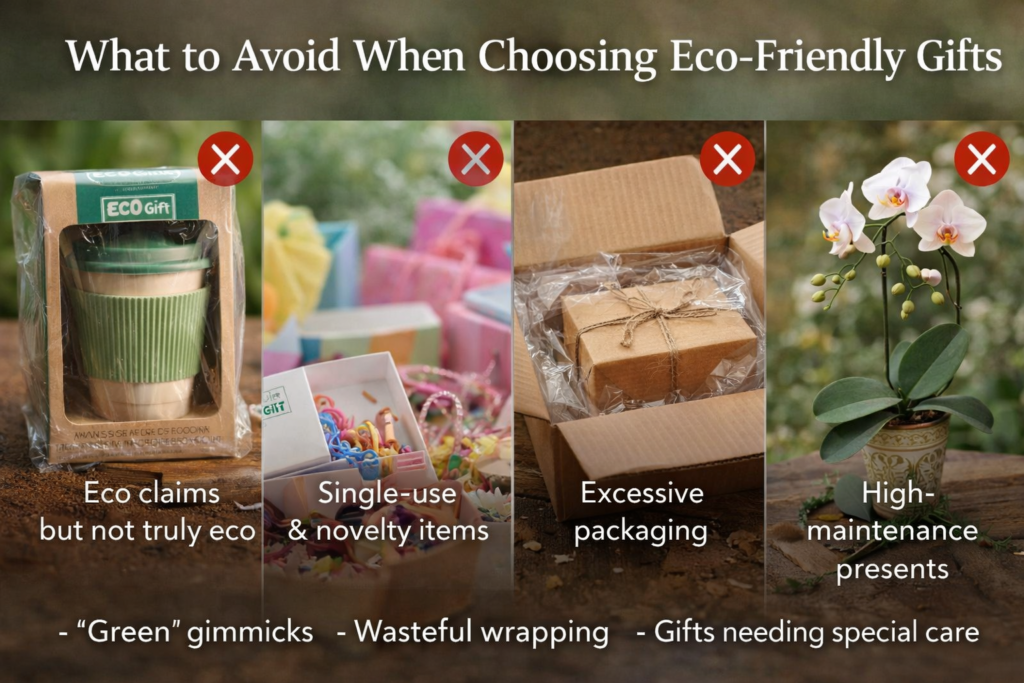
This isn’t about getting everything right – it’s about being more mindful.
1. “Eco” Gifts That Are Eco in Name Only
Not everything labeled sustainable truly is.
Be cautious of:
- Products with vague claims and no clear sourcing
- Items made from mixed materials that aren’t recyclable
- Trend-driven “green” products designed more for aesthetics than use
When in doubt, simplicity and transparency usually signal authenticity.
2. Single-Use or Novelty Items
Even if something looks eco-friendly, it loses value if it’s rarely used.
Avoid:
- Decorative items with no practical purpose
- Gimmicks that are used once and forgotten
- Gifts tied too specifically to one event or date
A gift that integrates into daily life is almost always the more sustainable choice.
3. Over-Packaging (Even When the Gift Is Sustainable)
Sometimes the waste comes not from the gift, but from how it’s presented.
Watch out for:
- Multiple layers of wrapping
- Plastic fillers or non-recyclable boxes
- Excessive branding or decorative elements
Minimal, reusable, or recyclable packaging often feels more intentional – and more elegant.
4. Gifts That Create Responsibility, Not Joy
A gift shouldn’t feel like an obligation.
Examples include:
- High-maintenance plants for non-gardeners
- Products requiring special care or storage
- Items that don’t suit the recipient’s lifestyle
Sustainability includes emotional ease – not added pressure.
5. Assuming “Eco-Friendly” Means One-Size-Fits-All
Context matters.
A good sustainable gift considers:
- The occasion
- The relationship
- The recipient’s space, habits, and preferences
A thoughtful choice will always outperform a trendy one.
Eco-friendly gifting works best when it’s rooted in awareness, not perfection. A simple, well-chosen gift – offered with care – will always leave a better impression than something chosen purely to make a statement.
A Thoughtful Note Before You Go
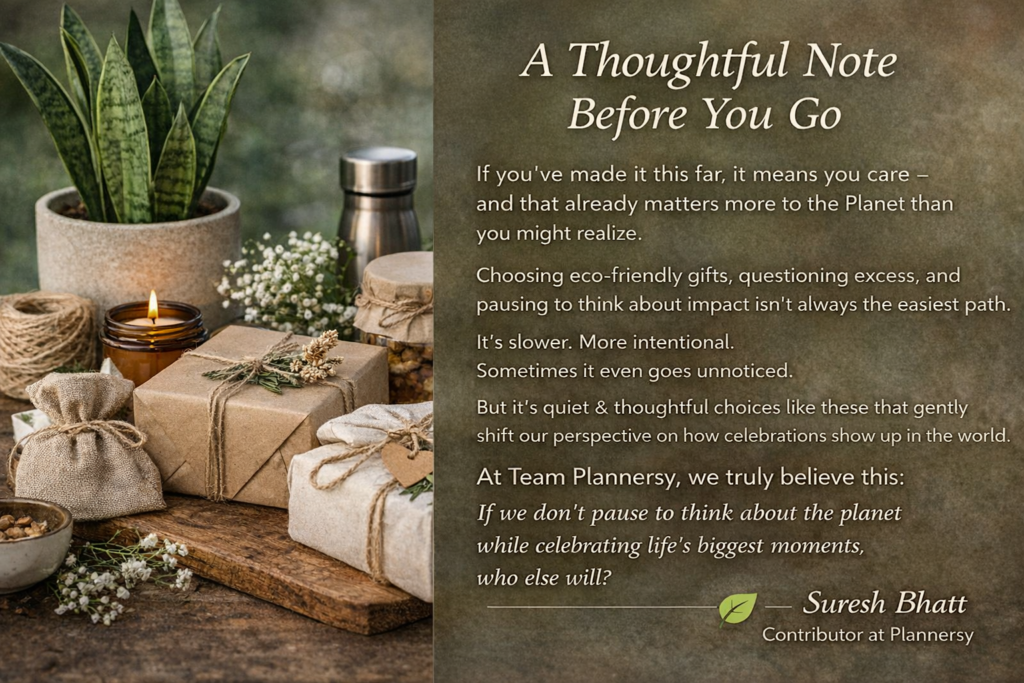
If you’ve made it this far, it means you care – and that already matters more to the Planet than you might realize.
Choosing eco-friendly gifts, questioning excess, and pausing to think about impact isn’t always the easiest path.
It’s slower. More intentional.
Sometimes it even goes unnoticed. But it’s quiet & thoughtful choices like these that gently shift our perspective on how celebrations show up in the world.
At Team Plannersy, we truly believe this: If we don’t pause to think about the planet while celebrating life’s biggest moments, who else will?
Suresh Bhatt, Contributor at Plannersy
So thank you – for being mindful, for choosing kindness over convenience, and for celebrating love in a way that also respects the world we share. Sustainability isn’t about being perfect. It’s about caring enough to try.
We’re really glad you’re here 🌱
– Team Plannersy
Related Sustainable Reads You’ll Love
| Article Title | What It Covers |
|---|---|
| Slow Fashion Explained | A simple, honest breakdown of what slow fashion really means – and why it matters, especially for the Planet. |
| NGOs Accepting Food in India | A practical guide to reducing food waste by redistributing surplus wedding food responsibly. |
| How to Plan an Eco-Friendly Wedding in India | Step-by-step guidance for couples who want to celebrate consciously without losing joy or tradition. |
| Sustainable Bridal Wear Brands in India | A curated list of bridal brands that prioritize ethics, craftsmanship, and longevity. |
| How to Make Your Wedding More Sustainable | Practical changes – big and small – that collectively make a meaningful difference. |
| Food Wastage in Indian Weddings | An eye-opening look at food waste in celebrations, and how we can do better together. |