![World’s Most Visited Religious Places [Sacred Spaces That Inspire Millions]](https://plannersy.com/wp-content/uploads/2025/12/Angkor-Wat-Cambodia-2-900x500.webp)
World’s Most Visited Religious Places [Sacred Spaces That Inspire Millions]
The world is home to countless sacred spaces, each steeped in history, spirituality, and cultural richness.
From towering temples and majestic basilicas to serene shrines and golden pagodas, these sites draw millions of visitors every year, offering unique glimpses into faith, devotion, and human creativity. In this guide, we explore the world’s most visited religious places, highlighting not only their historical and spiritual significance but also practical tips, visitor experiences, and must-see highlights.
Whether you’re a pilgrim seeking spiritual fulfillment, a culture enthusiast marveling at architectural masterpieces, or a traveler looking for unforgettable experiences, this comprehensive guide from Plannersy will help you navigate and appreciate these extraordinary destinations.
Discover the sacred wonders that inspire awe, reflection, and connection across the globe.
1. Angkor Wat – Siem Reap, Cambodia
Angkor Wat, the crown jewel of Cambodia, is the largest religious monument in the world and one of humanity’s greatest architectural achievements.
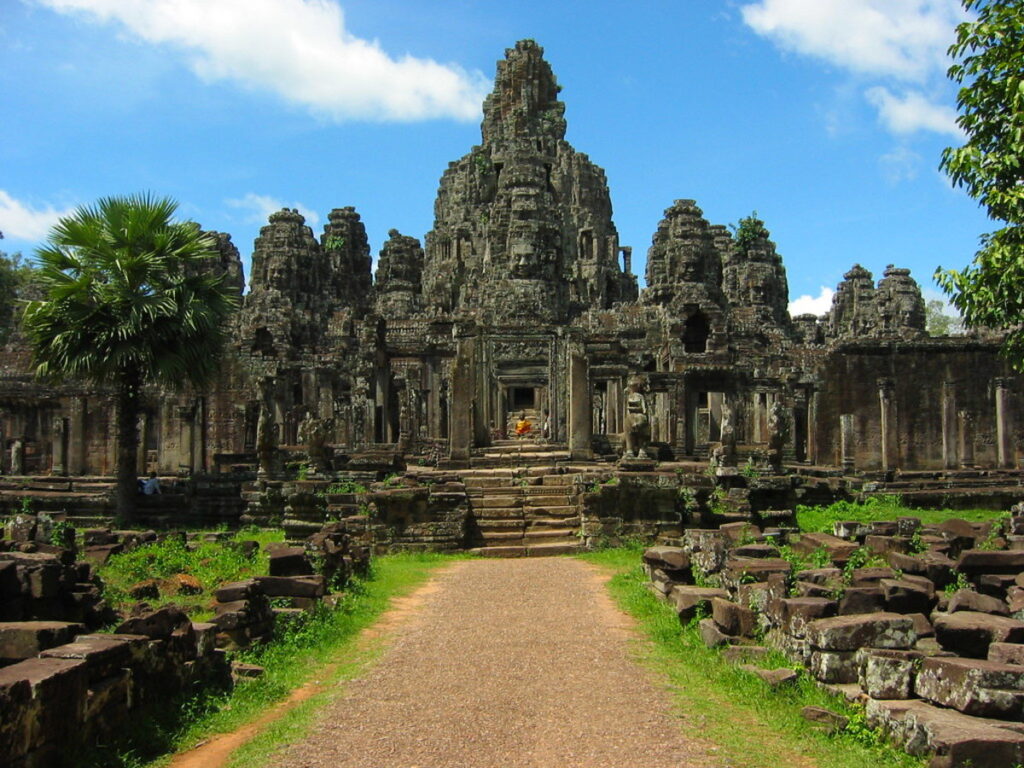
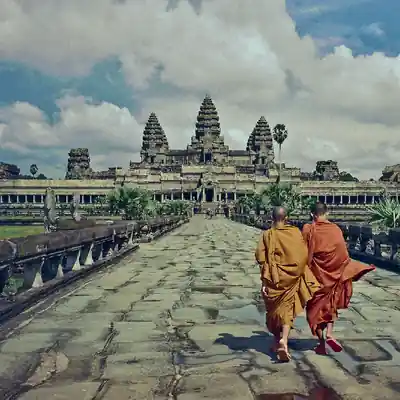
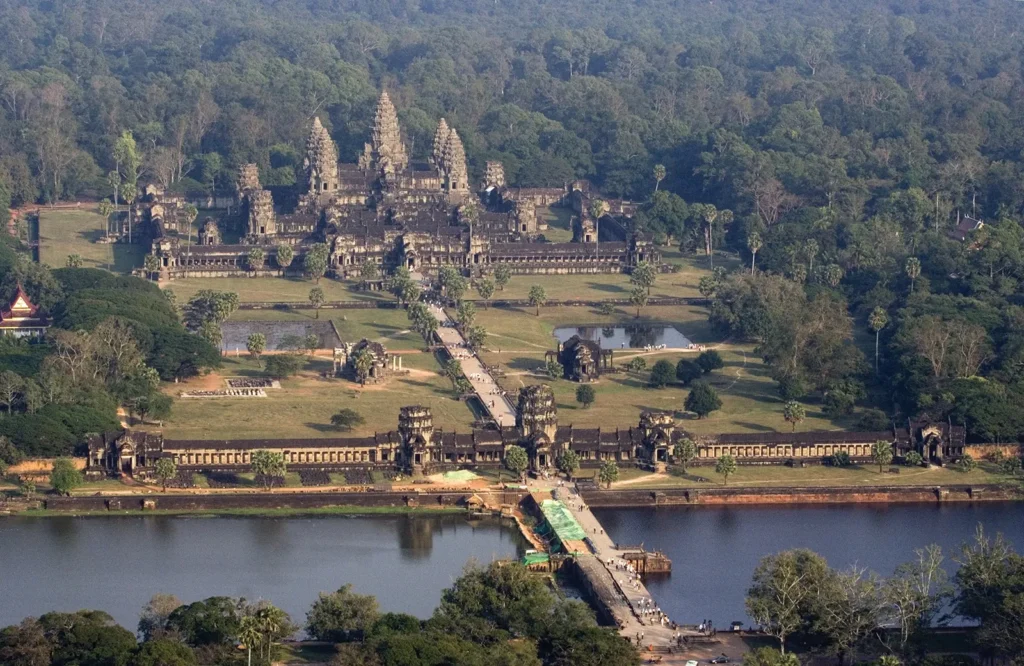
Originally built in the early 12th century as a Hindu temple dedicated to Vishnu – and later transformed into a major Buddhist sanctuary – Angkor Wat draws over 2 million visitors annually to its ancient corridors, lotus-filled moats, and sunrise silhouettes.
At Plannersy, we often describe Angkor Wat as a place where imagination feels small in the best possible way. The scale, symmetry, carvings, and spiritual silence inside the temple grounds create an experience that feels mystical and timeless. Whether you’re an art lover, history explorer, or spiritual traveler, Angkor Wat has a way of stirring awe with every step.
At a Glance – Quick Facts
| Feature | Details |
|---|---|
| Name | Angkor Wat |
| Location | Siem Reap, Cambodia |
| Religion | Originally Hindu; now Buddhist |
| Annual Visitors | 2 million+ |
| Built | Early 12th century (reign of King Suryavarman II) |
| Architectural Style | Khmer architecture |
| Significance | World’s largest religious temple; UNESCO World Heritage site |
| Key Features | Central towers, bas-reliefs, reflecting pools |
| Symbolism | Represents Mount Meru, the cosmic mountain of Hindu-Buddhist cosmology |
| Best Time to Visit | Sunrise |
| Entry Fee | Angkor Pass required (1-day to 7-day passes) |
History & Cultural Significance
Angkor Wat was originally constructed as a grand Hindu temple honoring Vishnu, showcasing the pinnacle of classical Khmer architecture. Over time, as Cambodia’s religious identity evolved, the temple became a revered Buddhist site, blending statues, shrines, and practices from both traditions.
Its design represents the mythical mountain Mount Meru, believed to be the home of gods – symbolized through five iconic towers and concentric galleries. This cosmic symbolism, paired with intricate bas-reliefs depicting Hindu epics like the Ramayana and Mahabharata, positions Angkor Wat as a cultural treasure of immense historical and spiritual depth.
Top Highlights (Facts & Distinctions)
- Recognized as the largest temple complex on Earth
- A rare temple that transitioned from Hindu to Buddhist worship
- Contains over 600 meters of detailed bas-reliefs
- Perfectly aligned with the sun during equinox sunrises
- Considered one of the Seven Wonders of the World (modern lists)
- Cambodia’s national symbol – featured proudly on its flag
- World-class sunrise viewpoint at the reflecting pools
Major Sights & Experiences at Angkor Wat
- Central Sanctuary & Towers – The iconic five-tower silhouette symbolizing Mount Meru
- Bas-Relief Galleries – Endless carved narratives including:
- Churning of the Ocean of Milk
- Battle of Kurukshetra
- Heaven and Hell scenes
- Outer Moat & Causeway – Picturesque entry offering panoramic temple views
- Reflection Pools – Famous sunrise photo spots
- Library Buildings – Elegant stone structures near the main walkway
- Steep Ascents to Higher Levels – Offering spectacular views over the jungle
- Apsara Carvings – 1,500+ celestial dancers carved into the walls
- Buddhist Shrines – Active worship areas inside the galleries
Visitor Tips & Planning Advice
Best Time for Sunrise: Arrive by 4:45–5:00 AM to secure a good spot near the reflecting pools.
Dress Code: Shoulders and knees must be covered – required for temple areas.
Heat Awareness: Cambodian afternoons are extremely hot; morning visits are more comfortable.
Footwear: Sturdy shoes recommended – stairways are steep and uneven.
Guided Tours: Highly recommended, especially for understanding the bas-relief stories.
Angkor Pass: Purchase at the official ticket center; carry it at all times.
Crowds: Expect early morning crowds at sunrise; afternoons are quieter.
Photographing the Sunrise: Use the left reflecting pool for the classic shot.
Temple Etiquette: Speak softly, avoid stepping on sacred platforms, and be mindful of monks.
Nearby Sacred or Historic Sites Within the Angkor Complex
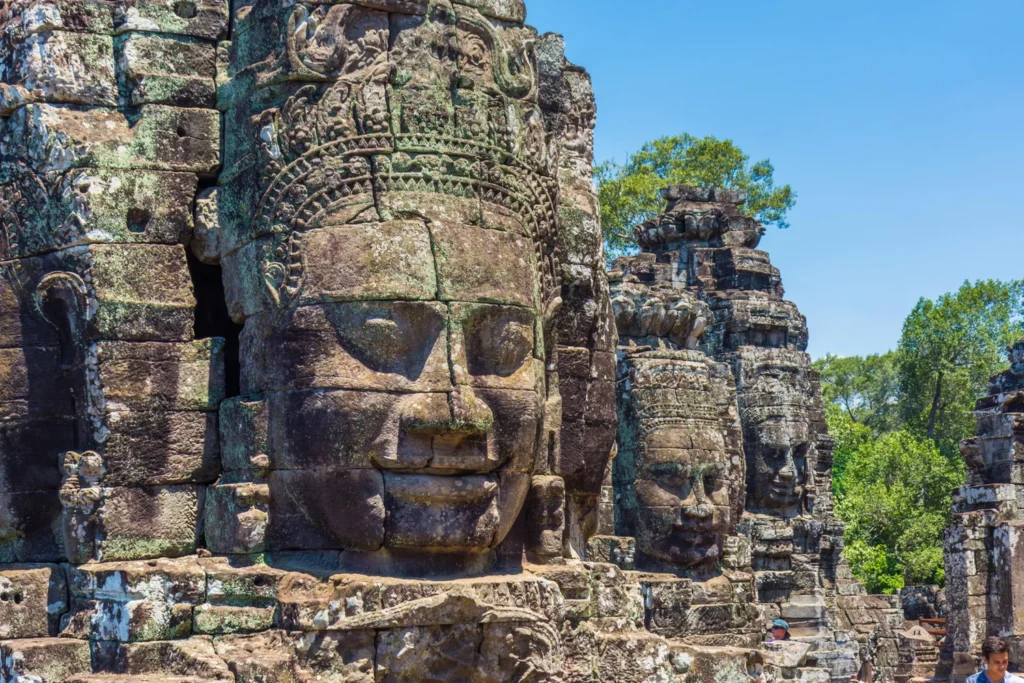
- Bayon Temple – Known for its 200+ smiling stone faces
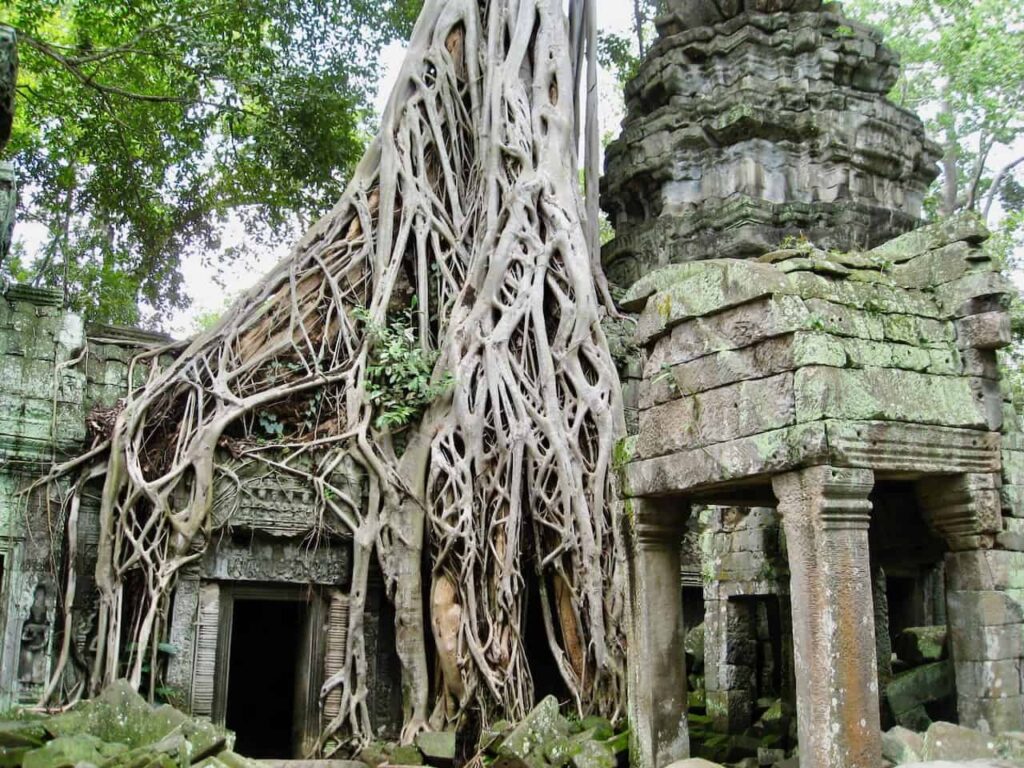
- Ta Prohm (Tomb Raider Temple) – Tree roots intertwined with ancient stone
- Preah Khan – Sprawling temple with atmospheric corridors
- Angkor Thom – Last capital of the Khmer Empire
- Banteay Srei – The “women’s temple” with exquisite pink sandstone carvings
Plannersy’s Heartfelt Insight
“Angkor Wat has a magical way of making people fall silent – not out of formality, but awe. Watching the sunrise behind its towers feels almost dreamlike.
And walking through its vast halls, lined with ancient carvings, you sense both the brilliance of human creativity and the sacredness that has lived here for centuries.”
Ideal For
- Heritage and history travelers
- Buddhism & Hinduism pilgrims
- Photographers and culture lovers
- Families exploring Southeast Asia
- Solo travelers seeking wonder and serenity
Frequently Asked Questions (FAQs)
1. Is Angkor Wat still an active religious site?
Yes – it remains an important Buddhist pilgrimage site.
2. How long should I plan for a visit?
At least 3–5 hours; a full day is ideal.
3. Can I climb the central tower?
Yes, but there may be timed entry limits during peak seasons.
4. Is there a dress code?
Yes – modest attire is required.
5. Is sunrise worth it?
Absolutely – it’s one of the world’s most iconic sunrise experiences.
6. Is Angkor Wat child-friendly?
Yes, though the heat and steep steps may be challenging.
7. Are drones allowed?
No – drones are prohibited without special permits.
8. What’s the best season to visit?
November to February (cool and dry).
9. Are local guides available at the temple?
Yes – licensed guides can be hired at the entrance.
10. What makes Angkor Wat unique?
Its unmatched size, Hindu-Buddhist fusion, cosmic symbolism, and breathtaking artistry.
2. Ram Mandir – Ayodhya, India
The Ram Mandir in Ayodhya has quickly emerged as one of the most visited and spiritually significant religious sites in the world.
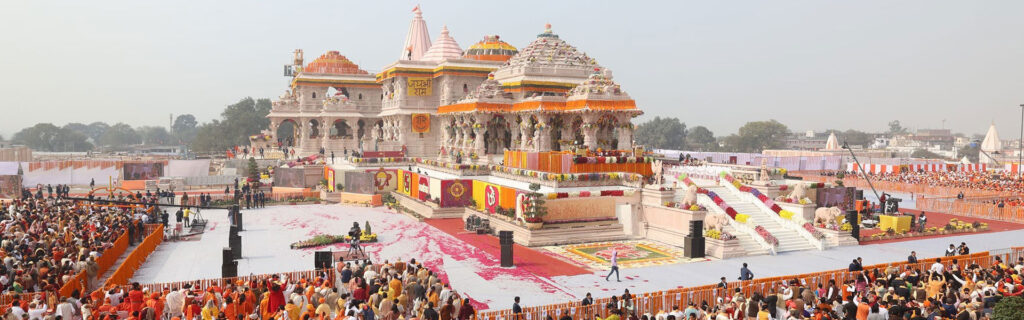
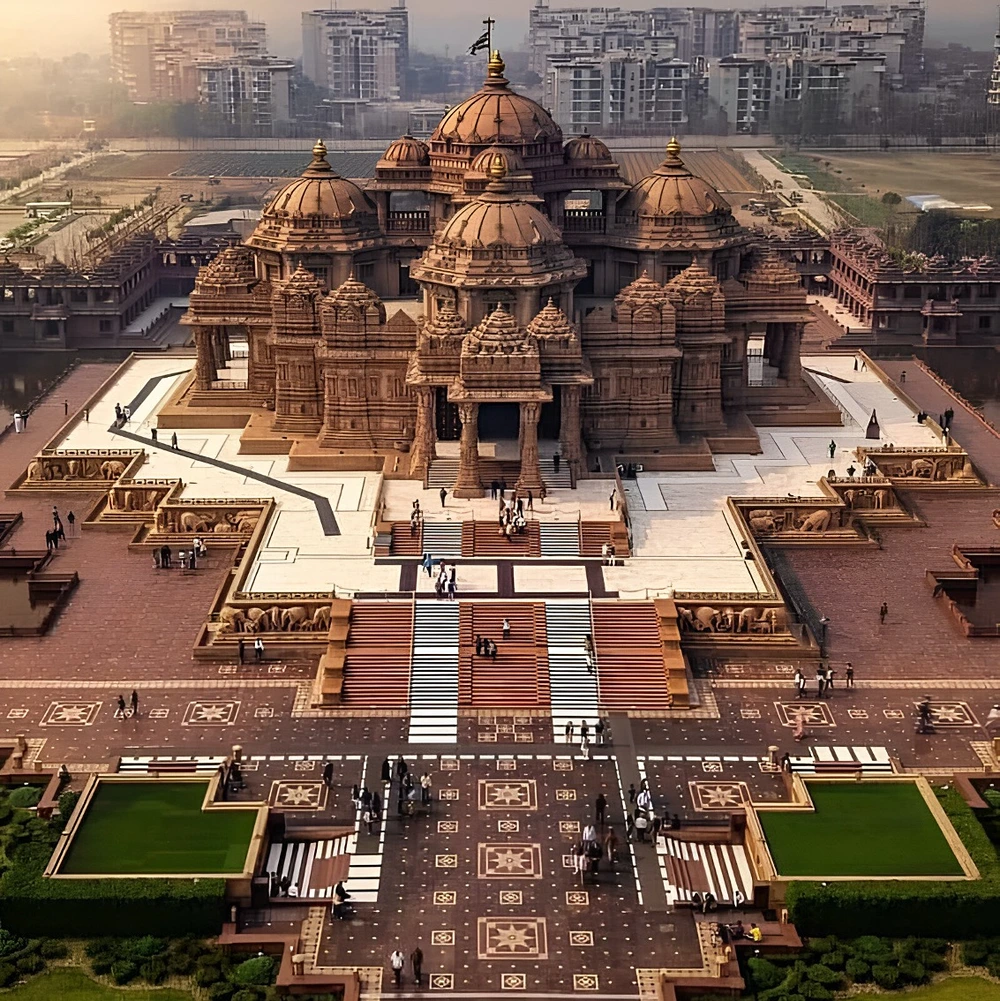
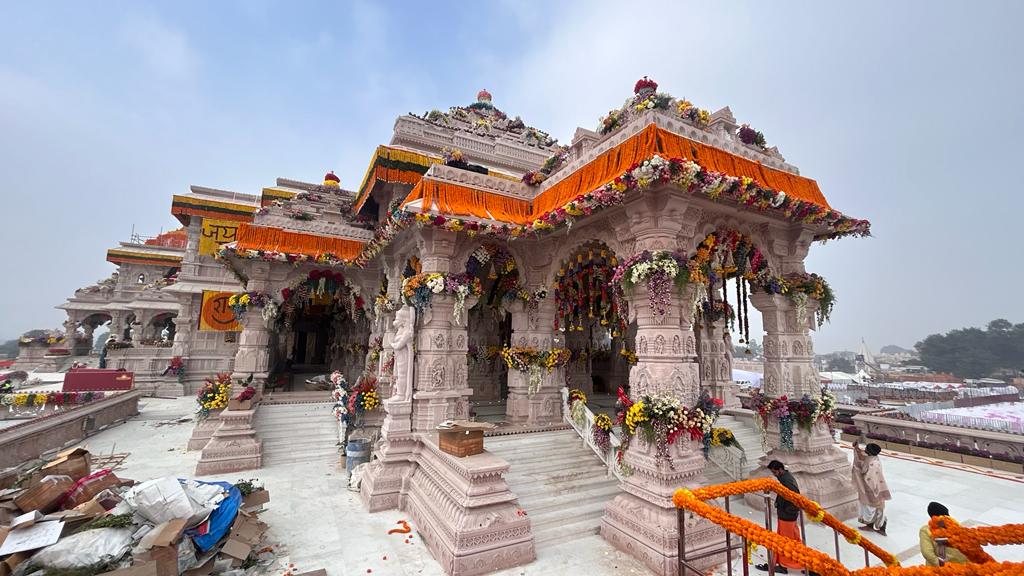
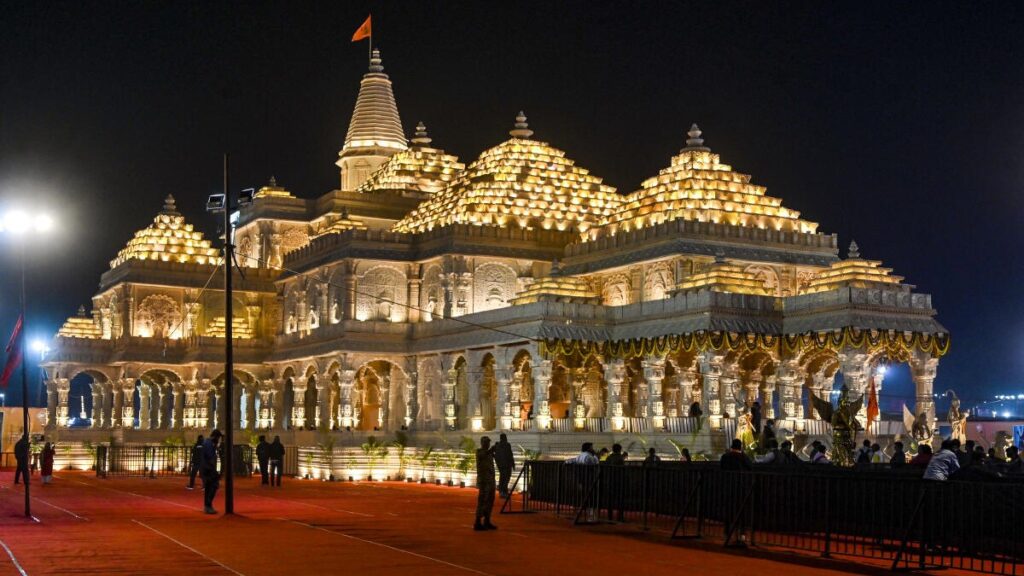
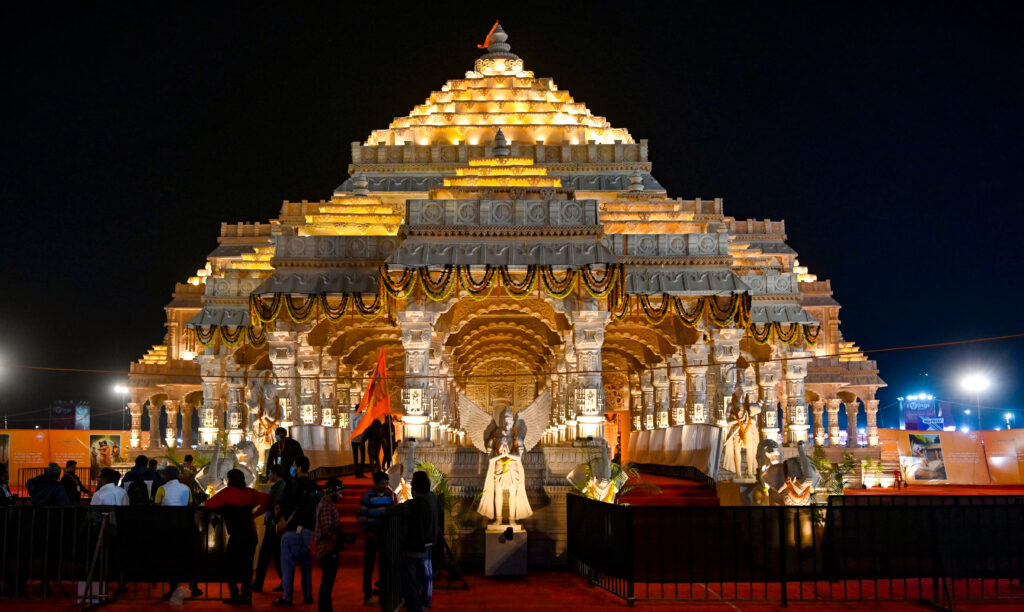
Built on a foundation of devotion that stretches back centuries, this temple stands at the heart of India’s rich spiritual heritage and cultural identity. Since its consecration on January 22, 2024, millions of devotees have made the pilgrimage to Ayodhya to experience its sacred atmosphere, participate in prayer, and seek blessings.
More than just a destination, the Ram Mandir represents a profound connection to ancient traditions, mythological history, and the enduring values that Lord Rama symbolizes for millions of people.
At Plannersy, we recognize the spiritual weight of this place – and our aim in this comprehensive section is to help both first-time visitors and returning pilgrims prepare thoughtfully and meaningfully for their journey.
At a Glance – Quick Facts
| Feature | Details |
|---|---|
| Name | Shri Ram Janmabhoomi Mandir (Ram Mandir) |
| Location | Ayodhya, Uttar Pradesh, India |
| Religion | Hinduism |
| Consecration | January 22, 2024 |
| Annual Visitors | Tens of millions (city-wide visitor figures surpass similar major sites) |
| Significance | Believed birthplace of Lord Rama |
| Architecture | Traditional Hindu temple style with Rajasthani pink sandstone and Makrana marble. |
| Best Time to Visit | Cooler months: October to March |
| Entry Requirements | Open to all visitors; darshan booking recommended |
| Dress Code | Modest traditional attire recommended |
| Accessibility | Easy access from major north Indian cities; ongoing infrastructure development |
History & Cultural Significance
The site of the Ram Mandir is believed to be the birthplace of Lord Rama, an incarnation of Vishnu and central figure of the ancient Indian epic Ramayana. This belief has made Ayodhya a sacred pilgrimage site for centuries.
Throughout history, the site has been at the center of cultural and religious discourse. Following a landmark legal verdict and decades of public interest, the Ram Mandir was completed and consecrated in 2024, marking a deeply emotional and historically significant moment for millions of devotees worldwide.
Since then, the temple has become a focal point for spiritual pilgrimage and cultural tourism, contributing to Ayodhya’s transformation into a major global religious destination.
Top Highlights (Facts, Features & Distinctions)
- Built in traditional Hindu architectural style with intricate carvings, carved pillars, and grand shikhara (spire).
- Believed to be located at the exact birthplace of Lord Rama, one of the most revered deities in Hinduism.
- Since consecration, the temple has attracted tens of millions of devotees, making it one of India’s most visited spiritual sites.
- Ayodhya has become Uttar Pradesh’s most visited attraction, surpassing even iconic monuments like the Taj Mahal in domestic footfall.
- The temple complex includes landscaped parks, devotional zones, and cultural exhibits that enrich the pilgrim experience.
Sights Within the Temple Complex
- Garbhagriha (Sanctum Sanctorum) – Houses the sacred Ram Lalla idol for darshan.
- Temple Courtyards – Expansive areas designed for ease of movement and evening aarti.
- Ram Darbar – Dedicated space honoring Lord Rama, Sita, Lakshmana, and Hanuman.
- Parkota Walls – Enclosure featuring cultural and mythological artistic panels.
- Landscaped Gardens – Quiet spots for reflection around the temple grounds.
- Nearby Devotional Sites – Including Hanuman Garhi, Kanak Bhavan, and Saryu River ghats for holistic pilgrimage experiences.
Visitor Tips & Planning Advice
Best Time to Visit:
October to March offers cooler weather and more comfortable exploration conditions. Early morning and late afternoon visits help avoid peak crowd periods.
Darshan Booking:
While walk-in darshan is possible, booking a darshan pass in advance (online or through official portals) can significantly reduce queue times.
Local Transport:
Ayodhya is accessible by train, road, and the newly developed international airport. E-rickshaws, taxis, and local transport services provide convenient last-mile travel to the temple complex.
Dress & Etiquette:
Modest attire reflecting local custom is recommended for all visitors, irrespective of religion. Footwear is to be removed before entering the temple premises.
Food & Hydration:
Carry water and snacks, especially during summer months. Local eateries offer North Indian vegetarian cuisine; traditional sweets and snacks are also available near the temple area.
Crowd Management:
Dedicated pathways and security personnel help manage large crowds. Following the instructions of staff ensures a safe and respectful experience.
Connectivity & Tech:
Mobile networks work reliably; digital ticketing and information services are widely supported.
Nearby Attractions & Local Experiences
Ayodhya offers spiritually rich and culturally diverse experiences beyond the Ram Mandir:
- Hanuman Garhi Temple – A historic hilltop temple and popular pilgrimage stop.
- Saryu River Ghats – Serene riverside spots for prayer and reflection.
- Kanak Bhavan – A temple believed to be built for Sita by King Janaka.
- Ayodhya Ghats & Sacred Pools – Scenic areas for sunrise and evening visits.
Plannersy’s Heartfelt Insight
At Plannersy, we believe the experience of visiting Ram Mandir reaches beyond physical presence – it’s about the quiet, deeply felt moments of connection with tradition, devotion, and inner reflection. Plan your visit with patience and an open heart, for this spiritual journey is as much inward as it is outward.
Ideal For
- Pilgrims and spiritual seekers of all ages
- Families seeking cultural immersion
- Devotees honoring Hindu heritage
- International visitors exploring India’s spiritual landscapes
- Travel planners looking to include high-impact destinations
Frequently Asked Questions (FAQs)
1. Do I need to book in advance to visit Ram Mandir?
Advance booking of darshan passes is recommended to avoid long queues and secure preferred time slots.
2. Is there an entry fee?
Generally, entry to the temple is free, though special darshan categories or guided services may involve fees.
3. What’s the best time of year to visit?
The winter and early spring months (October–March) offer cooler weather and a more comfortable visit.
4. Are there facilities for elderly and differently-abled visitors?
Yes, priority queues and assistance services are available to support all pilgrims.
5. Can non-Hindus visit the temple?
Yes. The temple welcomes all visitors regardless of religious background, provided they respect local customs and dress codes.
6. How long does a typical visit take?
A standard darshan visit may take from one to several hours depending on crowd levels and timing.
7. Are lockers available?
Some facilities near the temple or nearby transport hubs offer luggage storage options; check locally for availability.
8. Are food and water facilities available nearby?
Yes – restaurants, cafes, and refreshment stalls are plentiful within short walking distance.
9. What else can I see in Ayodhya on the same visit?
Consider visiting Saryu River ghats, Hanuman Garhi, and Kanak Bhavan for a fuller cultural experience.
10. Is photography allowed inside the temple complex?
Photography rules vary – non-disruptive photos are generally allowed in outdoor areas, but check signage and staff guidance inside sensitive zones.
3. Kiyomizu-dera Temple – Kyoto, Japan
Kiyomizu-dera, meaning “Pure Water Temple,” is one of Japan’s most famous Buddhist temples and a UNESCO World Heritage site. Perched on the scenic hills of eastern Kyoto, it offers breathtaking views of cherry blossoms, autumn foliage, and the city below. Built in 778 CE, this temple draws millions of visitors annually, blending spirituality, history, and natural beauty in one unforgettable experience.
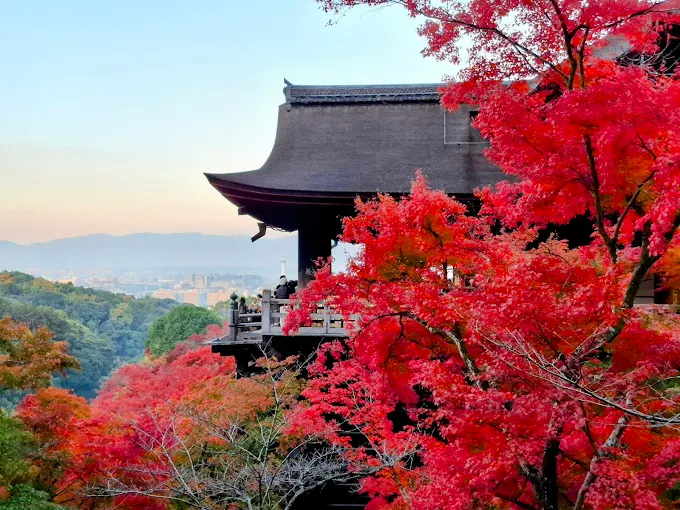
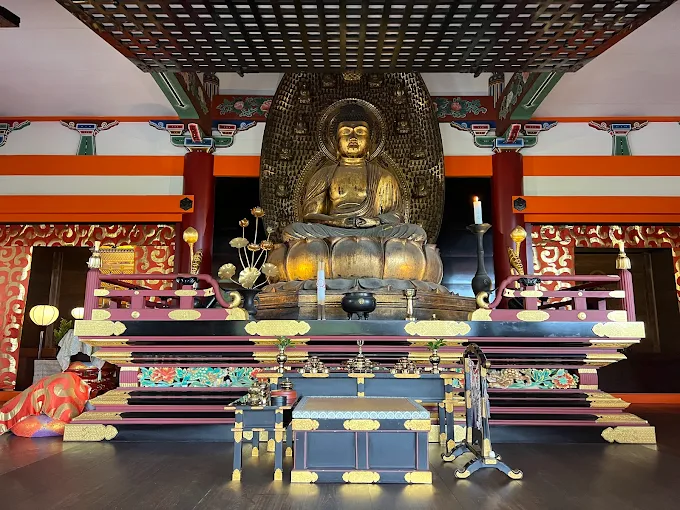
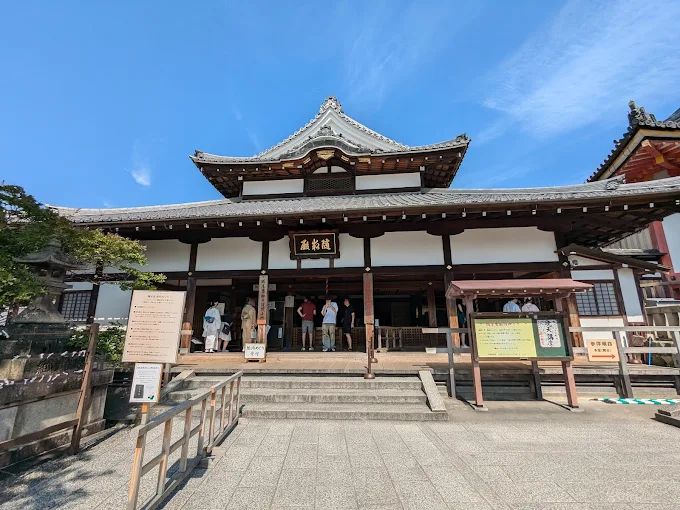
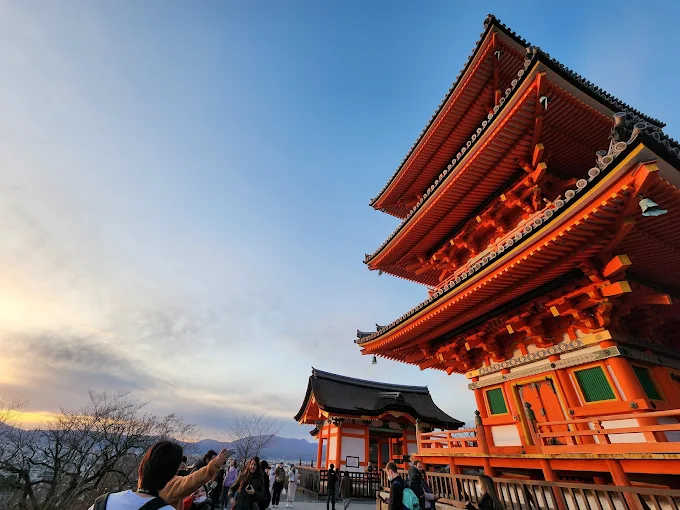
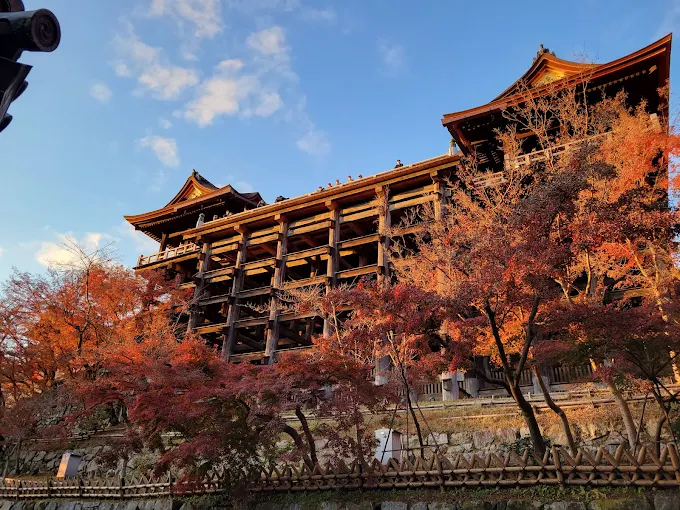
At Plannersy, we often describe Kiyomizu-dera as a place where nature and devotion exist in perfect harmony. The sound of flowing water, the gentle wind through maple trees, and the rhythmic chants create an atmosphere of quiet reflection.
Visitors often leave with a sense of peace, connection, and inspiration that lasts well beyond their trip.
At a Glance — Quick Facts
| Feature | Details |
|---|---|
| Name | Kiyomizu-dera (Pure Water Temple) |
| Location | Kyoto, Japan |
| Religion | Buddhism (Kōyasan Shingon sect) |
| Annual Visitors | 3–5 million+ |
| Founded | 778 CE |
| Architectural Style | Traditional Japanese wooden temple architecture |
| Key Features | Main hall, Kiyomizu Stage, Otowa Waterfall, Jishu Shrine |
| Significance | UNESCO World Heritage site; spiritual and cultural icon of Kyoto |
| Best Time to Visit | Spring (cherry blossoms) or Autumn (fall foliage) |
| Entry Fee | Approximately ¥400 (~$3 USD) |
History & Cultural Significance
Kiyomizu-dera was founded during the Heian period and is dedicated to Kannon Bosatsu (the Goddess of Mercy). Its name derives from the Otowa Waterfall, whose waters are believed to have spiritual purity and healing qualities.
Pilgrims drink from the waterfall via three streams, each promising health, longevity, or success in studies.
The temple is historically significant not just for its religious role, but also as a center for cultural gatherings, arts, and seasonal festivals in Kyoto. Its wooden main hall, built without nails, demonstrates Japan’s remarkable architectural ingenuity.
Top Highlights (Facts & Distinctions)
- Famous for its main hall with a large wooden stage extending over the hillside
- The Otowa Waterfall offers three streams of spiritually symbolic water
- Jishu Shrine, located on-site, is dedicated to love and matchmaking
- Part of the Historic Monuments of Ancient Kyoto UNESCO World Heritage site
- Stunning seasonal views: cherry blossoms in spring and fiery maple leaves in autumn
- Famous Japanese proverb: “Jump off the stage at Kiyomizu”, meaning taking a bold step (historical daredevil tradition)
- Active site of Buddhist rituals, prayers, and ceremonies
Major Sights & Experiences
- Main Hall & Kiyomizu Stage – Offers panoramic views of Kyoto
- Otowa Waterfall – Pilgrims drink from three streams for luck, health, and success
- Jishu Shrine – Devotees pray for love and relationship success
- Niomon Gate – Guardian statues marking the temple entrance
- Three-story Pagoda – Iconic structure for photography and meditation
- Temple Gardens – Serene walking paths with seasonal blooms
- Koyasu Pagoda – Dedicated to safe childbirth and family blessings
- Night Illuminations – Spring and Autumn evenings showcase magical lighting
Visitor Tips & Planning Advice
Best Time to Visit:
Early morning or late afternoon to avoid crowds, especially during cherry blossom season.
Dress Code:
No strict requirement, but modest and comfortable attire is recommended.
Footwear:
Shoes must be removed when entering main halls.
Photography:
Allowed in most areas, but avoid flash in prayer halls.
Accessibility:
Some slopes and steps may be challenging; walking shoes are recommended.
Special Experiences:
- Participate in small Buddhist rituals or buy omamori (protective charms)
- Drink from the Otowa Waterfall streams using provided cups
Crowds:
Peak seasons are spring (March–April) and autumn (October–November). Weekdays are calmer.
Nearby Sacred & Cultural Attractions
- Sannenzaka & Ninenzaka Streets – Traditional shopping streets near the temple
- Yasaka Shrine – Famous Shinto shrine nearby
- Maruyama Park – Cherry blossom hotspot
- Gion District – Traditional Geisha district
- Kodai-ji Temple – Zen garden and tea house experiences
Plannersy’s Heartfelt Insight
“Kiyomizu-dera offers more than history or architectural beauty; it invites you to pause and reflect. Standing on the wooden stage, watching the city and hills spread beneath, you feel both grounded and uplifted. The soft murmurs of devotion, the flowing waterfall, and seasonal colors combine to create a deeply moving experience for every visitor.”
Ideal For
- Buddhist pilgrims
- Cultural travelers and photographers
- Nature and seasonal enthusiasts
- Families and solo travelers
- Those seeking serenity and spiritual reflection
Frequently Asked Questions (FAQs)
1. How long should I spend at Kiyomizu-dera?
1.5–2 hours for the main temple; 3–4 hours if exploring gardens and nearby streets.
2. Is there an entry fee?
Yes, approximately ¥400 (~$3 USD) per adult.
3. Can non-Buddhists visit?
Yes – open to all visitors.
4. Are guided tours available?
Yes – both official and private guides offer cultural and historical insights.
5. When is the best season to visit?
Spring for cherry blossoms, Autumn for colorful foliage.
6. Can I drink from the Otowa Waterfall?
Yes – three streams offer blessings for health, longevity, and success.
7. Are there accessibility options?
Some slopes are steep; walking shoes are recommended.
8. Is photography allowed inside the temple?
Yes, except in certain indoor prayer areas.
9. Can I attend ceremonies or rituals?
Yes – small rituals happen regularly; participation is respectful and welcome.
10. Are children allowed?
Yes – the temple is family-friendly.
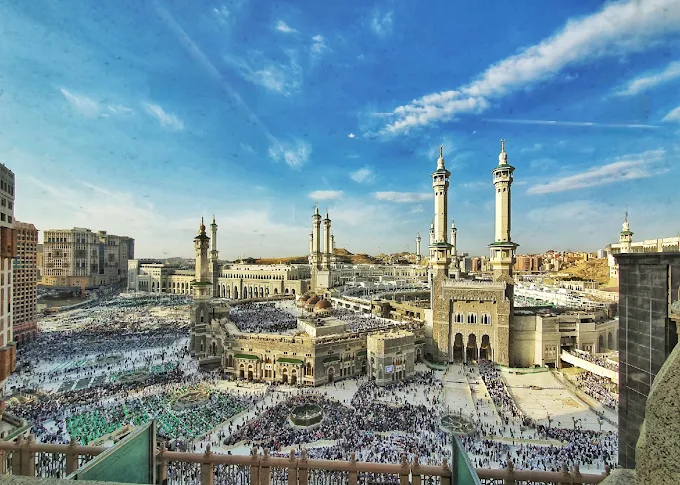
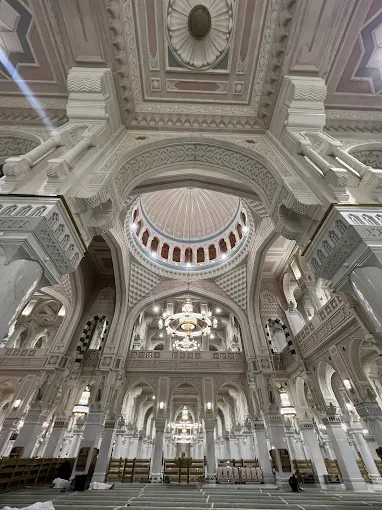
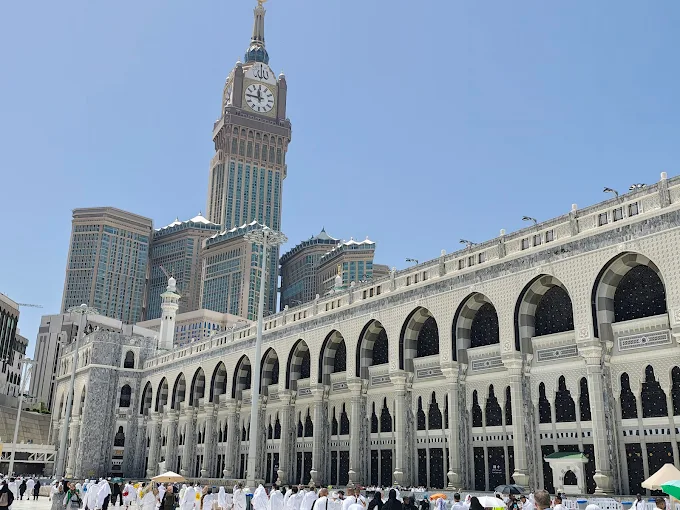
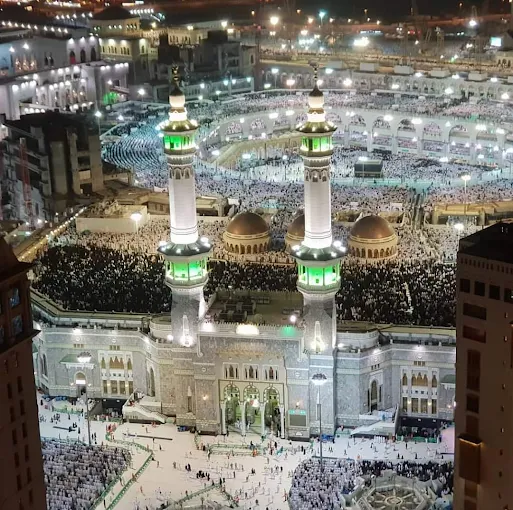
4. Mecca – Masjid al-Haram, Saudi Arabia
Masjid al-Haram in Mecca is one of the most spiritually powerful places on the planet, drawing millions of Muslims every year for both Hajj and Umrah. At its heart lies the Kaaba, the sacred structure that unites Muslims across continents and cultures through daily prayer.
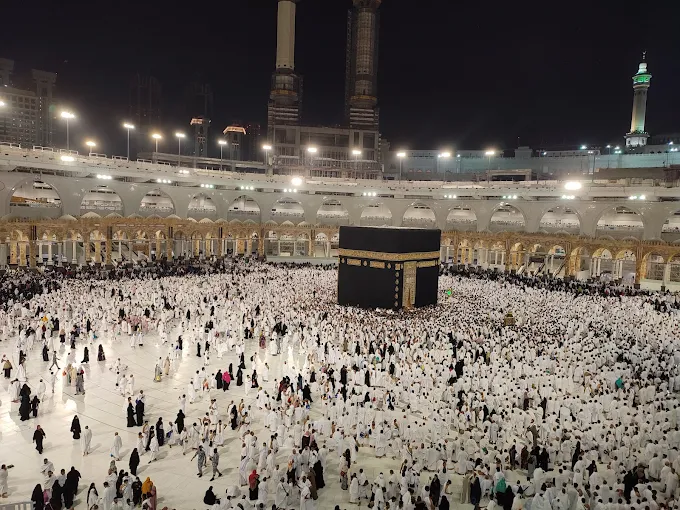
At Plannersy, we view this sanctuary not just as a destination, but as a profound experience – one that invites reflection, unity, and connection with the divine.
Whether you’re preparing for your first pilgrimage or seeking to understand its immense significance, this section is crafted with warmth, care, and heartfelt intention to guide you every step of the way.
At a Glance — Quick Facts
| Feature | Details |
|---|---|
| Name | Masjid al-Haram (Grand Mosque) |
| Location | Mecca, Saudi Arabia |
| Religion | Islam |
| Founded | Believed to be originally built by Prophet Ibrahim (Abraham) and Prophet Ismail |
| Annual Visitors | Approximately 20+ million (Hajj + Umrah combined) |
| Significance | Holiest site in Islam |
| UNESCO Status | Not UNESCO listed |
| Best Time to Visit | Outside peak Hajj and Ramadan periods for smaller crowds |
| Entry Requirements | Muslims only; requires appropriate pilgrimage visa |
| Dress Code | Modest attire; Ihram required for Hajj/Umrah rites |
| Accessibility | Excellent – ramps, wheelchairs, and crowd-management systems available |
History & Cultural Significance
Masjid al-Haram’s origins reach back thousands of years. Islamic tradition holds that Prophet Ibrahim (Abraham) and his son, Prophet Ismail, constructed the Kaaba as a sanctuary dedicated solely to the worship of one God.
From a small, sacred enclosure, the mosque has expanded over centuries under different rulers to accommodate an ever-increasing number of pilgrims. Today it stands as the largest mosque in the world, capable of hosting millions during Hajj.
The mosque represents unity, devotion, and the continuity of faith. Pilgrims perform Tawaf (circling the Kaaba), Sa’i (walking between Safa and Marwah), and a series of rites that trace back to ancient spiritual traditions.
Top Highlights (Facts, Features & Distinctions)
- Largest mosque in the world by capacity
- Home to the Kaaba – the qibla (direction) of prayer for all Muslims
- One of the oldest continuously used places of worship
- Features the sacred Zamzam water source within its premises
- Massive multi-billion-dollar expansions have modernized facilities while preserving tradition
- Welcomes pilgrims from more than 180+ countries annually
- Equipped with advanced crowd control and cooling technologies
Sights Within Masjid al-Haram
- The Kaaba – The most sacred structure in Islam, covered in a black silk cloth (Kiswah) embroidered with gold
- Black Stone (Hajar al-Aswad) – Set into the eastern corner of the Kaaba, venerated by pilgrims
- Mataf Area – Open area surrounding the Kaaba used for Tawaf
- Zamzam Well – Historic water source believed to have miraculous origins
- Safā and Marwah Hills – The pathway for Sa’i, enclosed within the mosque
- Abraj Al-Bait Clock Tower Viewpoint – Overlooks the entire mosque complex
- New Expansion Zones – Offer wider prayer areas, cooling systems, and improved accessibility
Visitor Tips & Planning Advice
Timing:
Visiting outside the Hajj period and Ramadan evenings can significantly reduce crowding. The early morning hours are usually the quietest.
Permits & Entry:
A valid Hajj or Umrah visa is required. Only Muslims are allowed within the city limits of Mecca.
Dress Code:
Modesty is essential. Ihram garments are mandatory for those performing Hajj or Umrah. Women should wear loose, modest clothing with a headscarf.
Hydration & Comfort:
The desert climate can be harsh. Stay hydrated, wear comfortable footwear, and take regular breaks.
Crowd Awareness:
Be mindful of elderly pilgrims and children during peak movements like Tawaf and Sa’i.
Connectivity:
Sim cards and pilgrim packages are widely available; Wi-Fi access is present in many parts of the mosque.
Transportation:
Most pilgrims arrive via Jeddah’s King Abdulaziz International Airport, then travel to Mecca by bus, train, or private car.
Photography Rules:
Respectful, non-disruptive photography may be allowed in some areas but is discouraged during rituals.
Nearby Attractions & Local Experiences
While Mecca is primarily a spiritual destination, several culturally meaningful sites enrich the journey:
- Mount Arafat – Key location for Hajj rituals
- Jabal al-Nour – Contains the Cave of Hira
- Makkah Museum – Showcases Islamic history and cultural artefacts
- Souqs & Date Markets – Traditional shopping and local flavors
Plannersy’s Heartfelt Insight
“At Plannersy, we often hear from travelers who say that the moment they first see the Kaaba is one they carry forever. It is a moment of quiet awe, of reflection, of gratitude. If you’re planning your pilgrimage, remember – this journey is as much about your inner world as the miles you travel.”
Ideal For
- Pilgrims performing Hajj or Umrah
- Spiritual travelers seeking reflection and renewal
- Cultural and historical enthusiasts
- Family groups embarking on religious journeys
Frequently Asked Questions (FAQs)
1. Can non-Muslims visit Masjid al-Haram?
No. Entry to Mecca and Masjid al-Haram is strictly limited to Muslims.
2. What is the best time of year to perform Umrah?
The months outside Ramadan and Hajj season (especially late autumn to early spring) offer more manageable crowds and milder weather.
3. How long does Umrah typically take?
Most pilgrims complete Umrah in one day, though many choose to stay longer for prayer and reflection.
4. Is Masjid al-Haram wheelchair accessible?
Yes. The mosque offers wheelchair zones, ramps, electric wheelchair rentals, and dedicated pathways.
5. What should women wear inside the mosque?
Loose, modest clothing and a headscarf. Women are not required to wear specific colors.
6. Can families travel with children?
Absolutely. Many families bring children, although extra care is needed during crowded rites like Tawaf.
7. Are guided tours available?
While traditional “tours” are not common due to the religious nature of the visit, many licensed agencies provide structured guidance for pilgrims.
8. How do I drink Zamzam water?
Dispensing stations are available throughout the mosque. Cups are provided, and filling personal bottles is common.
9. Are there restrictions on luggage inside the mosque?
Large bags are not permitted. Small personal bags are allowed.
10. What is the appropriate behavior inside the mosque?
Maintain calmness, speak softly, respect personal space, and prioritize worshippers.
5. Vatican City – St. Peter’s Basilica, Italy
St. Peter’s Basilica in Vatican City is more than an architectural masterpiece – it is a symbol of devotion, artistry, and centuries of faith woven into the heart of Christianity. Every year, millions of visitors and pilgrims walk into its vast marble halls seeking inspiration, reflection, and a deeper connection to history and spirituality.
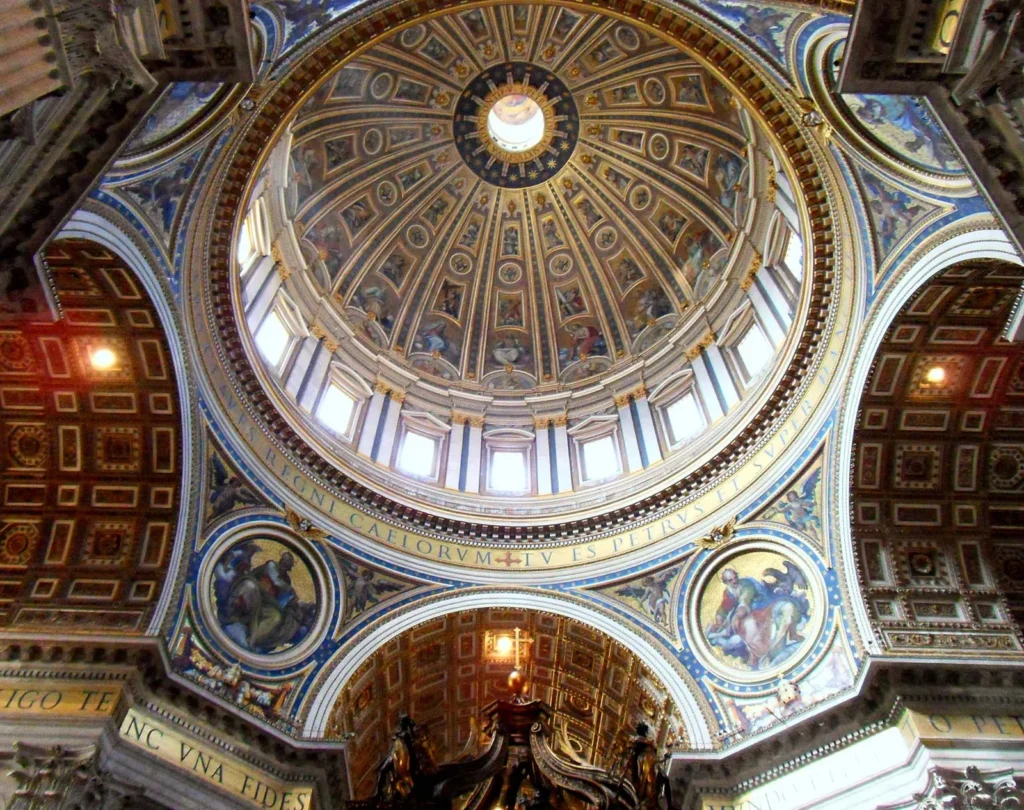
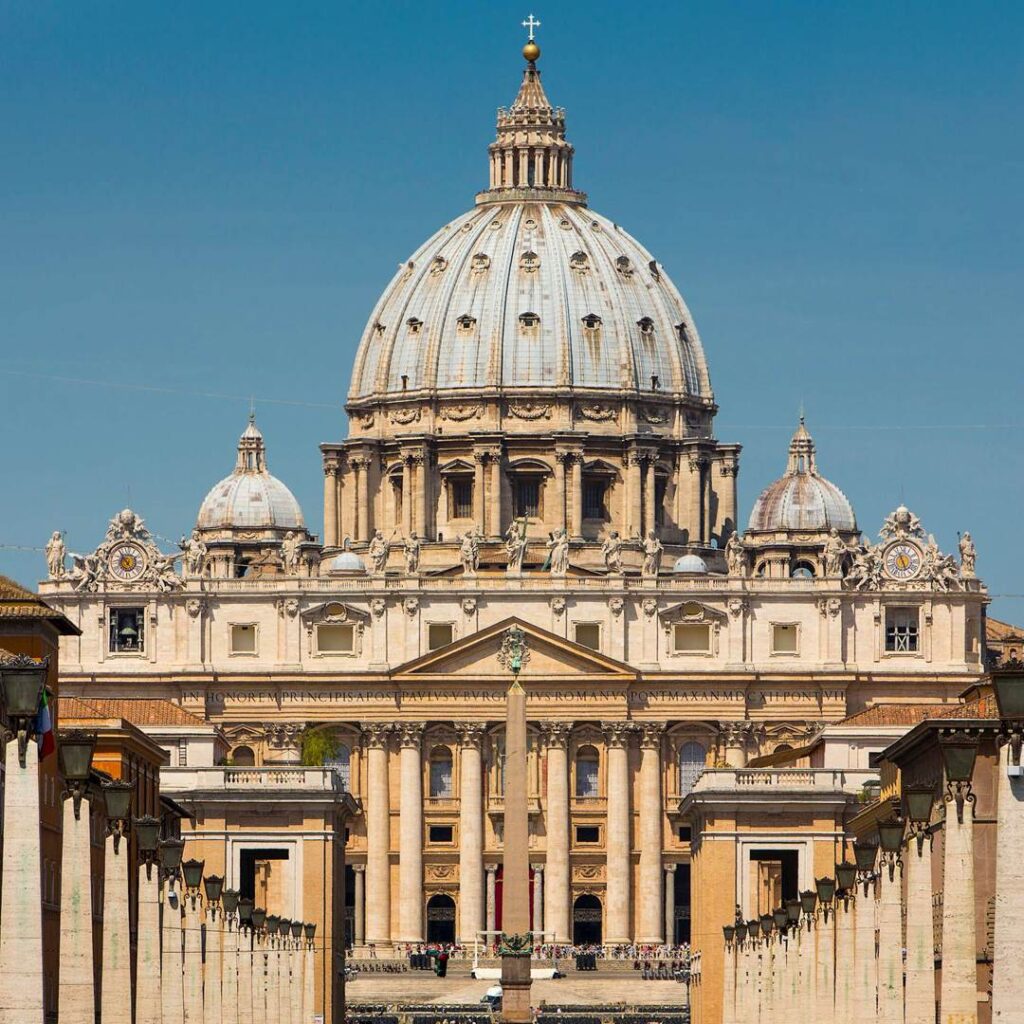
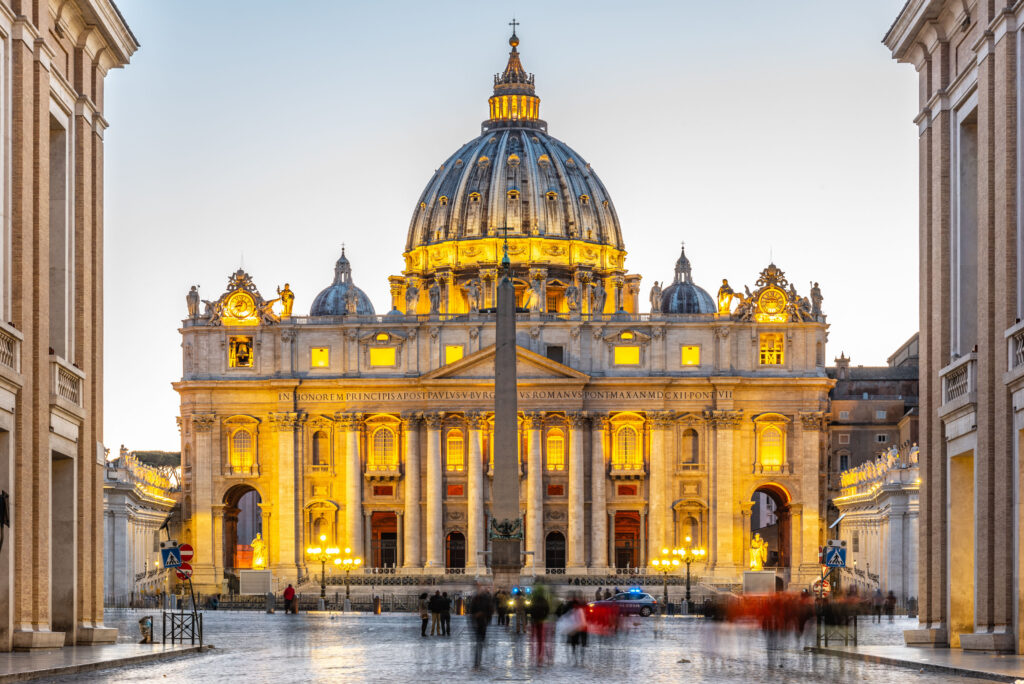
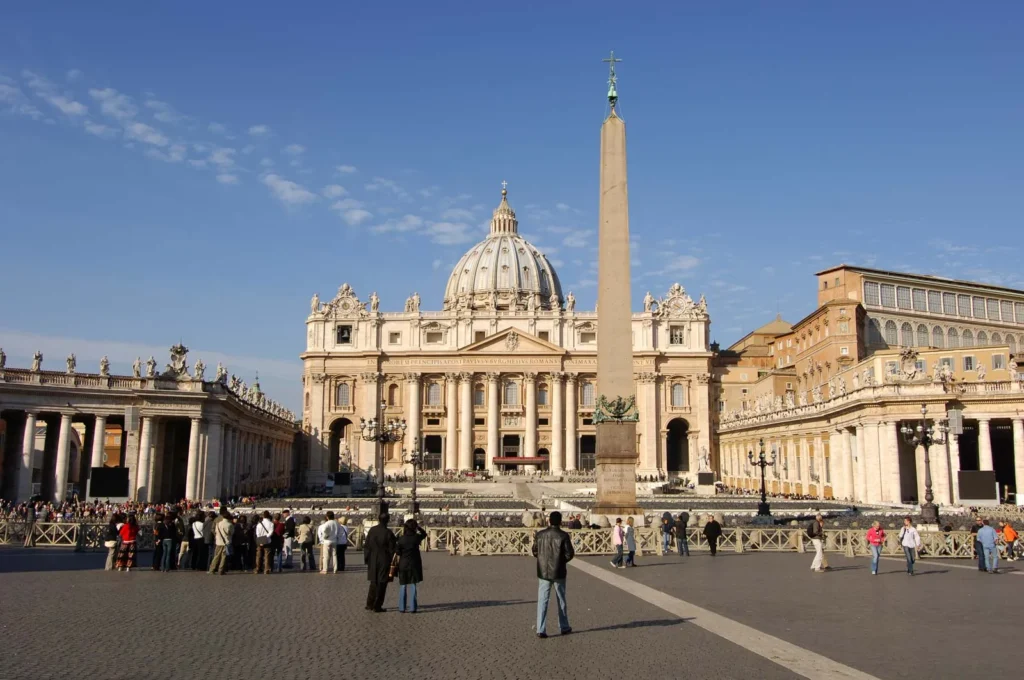
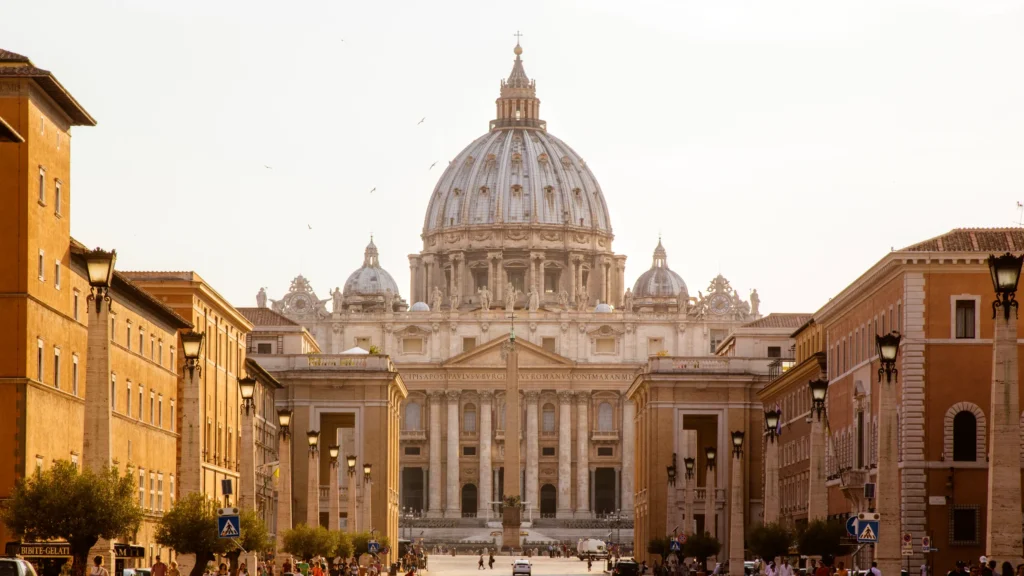
At Plannersy, we often describe St. Peter’s Basilica as a place where the soul feels gently lifted. The stillness, the grandeur, the light streaming through Michelangelo’s dome – it all creates a sense of reverence that lingers long after your visit ends.
Whether you are drawn by the spiritual significance, the Renaissance artistry, or the experience of standing in the world’s smallest sovereign state, this sacred destination offers something profoundly meaningful for every traveler.
At a Glance – Quick Facts
| Feature | Details |
|---|---|
| Name | St. Peter’s Basilica (Basilica di San Pietro) |
| Location | Vatican City (within Rome, Italy) |
| Religion | Christianity (Roman Catholic) |
| Founded/Built | Current basilica completed in 1626; original structure dated to 4th century |
| Annual Visitors | Estimated 10+ million |
| UNESCO Status | Part of Vatican City UNESCO World Heritage Site |
| Best Time to Visit | Early mornings on weekdays; January–March and November for fewer crowds |
| Entry Requirements | Open to all; security checks apply |
| Dress Code | Strict modest attire – shoulders and knees must be covered |
| Accessibility | Wheelchair accessible; elevators available to key sections |
History & Cultural Significance
St. Peter’s Basilica stands on the site where Saint Peter, one of Jesus’s apostles and the first Bishop of Rome (Pope), is believed to be buried. The original basilica, commissioned by Emperor Constantine in the 4th century, served as an important Christian sanctuary for over a thousand years before being replaced by the grand Renaissance structure that stands today.
Designed by legendary artists such as Michelangelo, Bernini, Bramante, and Raphael, the basilica represents the pinnacle of Renaissance and Baroque creativity. For Catholics worldwide, it is a central place of pilgrimage, especially during major liturgical events presided over by the Pope.
Its influence extends beyond religion – St. Peter’s Basilica is a global monument to art, culture, architecture, and human devotion.
Top Highlights (Facts, Features & Distinctions)
- One of the largest churches in the world, accommodating over 60,000 people
- Home to Michelangelo’s iconic Pieta sculpture
- Features the tallest dome in the world (136 meters high)
- Built over what is believed to be the tomb of Saint Peter
- Central venue for Papal ceremonies and blessings
- St. Peter’s Square, designed by Bernini, is one of the world’s most famous public spaces
- A masterpiece of Renaissance and Baroque architecture combined
Sights Within St. Peter’s Basilica & Surroundings
- St. Peter’s Dome – Climb or take the elevator for panoramic views of the Vatican and Rome
- Pietà by Michelangelo – A breathtaking sculpture depicting Mary holding Jesus
- Baldachin of Bernini – A monumental bronze canopy over the Papal altar
- St. Peter’s Tomb – Located beneath the basilica in the Vatican Grottoes
- St. Peter’s Square – An architectural marvel framed by grand colonnades
- Vatican Necropolis (Scavi Tour) – Underground archaeological site including ancient tombs
- The Holy Door – Opened only during Jubilee years, symbolizing spiritual renewal
- Treasury Museum – Houses papal artifacts and sacred relics
Visitor Tips & Planning Advice
Best Visiting Hours:
Arrive before 8:30 AM to enjoy quieter moments inside the basilica.
Dress Code:
Shoulders and knees must be covered. Scarves or light wraps are ideal for summer.
Entrance Fees:
Entry to the basilica is free; charges apply for the dome climb and guided tours.
Security Checks:
Airport-style screening at the entrance, so allow extra time.
Photography:
Allowed inside the basilica but prohibited in restricted areas like the Vatican Grottoes.
Mobility & Accessibility:
Wheelchair ramps and reserved areas ensure ease of movement for all visitors.
Tickets & Timing:
Dome access and Scavi tours require advance booking. Lines for the basilica itself can be long in peak season; early arrival can significantly reduce wait times.
Papal Audience:
Free tickets are available to attend the weekly Papal audience on Wednesdays (subject to schedule).
Nearby Attractions & Local Experiences
- Vatican Museums & Sistine Chapel – Home to Michelangelo’s legendary frescoes
- Castel Sant’Angelo – A fortress steeped in history
- Borgo District – Charming streets with cafés, trattorias, and historic shops
- Tiber River Walk – Peaceful pedestrian routes for scenic reflection
- Piazza Navona & Pantheon – Easily accessible from the Vatican area
Ideal For
- Pilgrims and spiritual seekers
- Art and architecture lovers
- History and culture enthusiasts
- Families and educational travelers
- First-time visitors to Rome
Frequently Asked Questions (FAQs)
1. Is there a fee to enter St. Peter’s Basilica?
No, entry is free, but the dome climb and certain tours require payment.
2. How long does a typical visit take?
Most visitors spend 1.5–3 hours, depending on crowds and whether they climb the dome or visit the grottoes.
3. Are guided tours recommended?
Yes. Knowledgeable guides provide deeper insight into the art, symbolism, and history.
4. What is the best day to visit?
Weekdays, especially Tuesday and Thursday, tend to be less crowded.
5. Is St. Peter’s Basilica open every day?
Yes, typically from early morning until late afternoon. Hours may vary during special ceremonies.
6. Can children visit the basilica?
Absolutely. Families with children are welcome.
7. Are bags allowed inside?
Small bags are permitted. Large luggage must be stored outside or avoided.
8. Can visitors attend a Mass inside the basilica?
Yes, daily Masses are held. Some may require seating reservations during major events.
9. What is the difference between the basilica and the Vatican Museums?
They are separate areas. The basilica is a church; the museums include the Sistine Chapel and art collections.
10. How do I get Papal Audience tickets?
They can be requested through official Vatican channels or certain religious organizations. Tickets are free but must be reserved.
11. Is photography allowed?
Yes, except in certain restricted areas. Flash photography is discouraged.
12. How difficult is the dome climb?
The elevator covers part of the journey, but visitors must climb over 300 steps if completing the ascent. It can be narrow and strenuous.
6. Basilica of Our Lady of Guadalupe – Mexico City, Mexico
The Basilica of Our Lady of Guadalupe is one of the most visited Christian pilgrimage destinations in the world – drawing 20+ million visitors annually, especially around December 12, the Feast of Our Lady of Guadalupe.
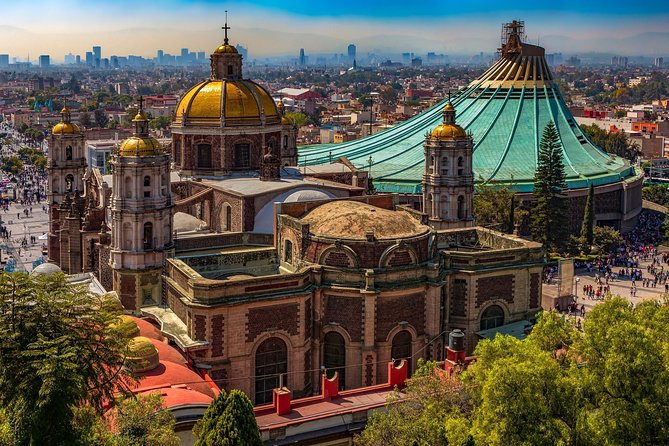
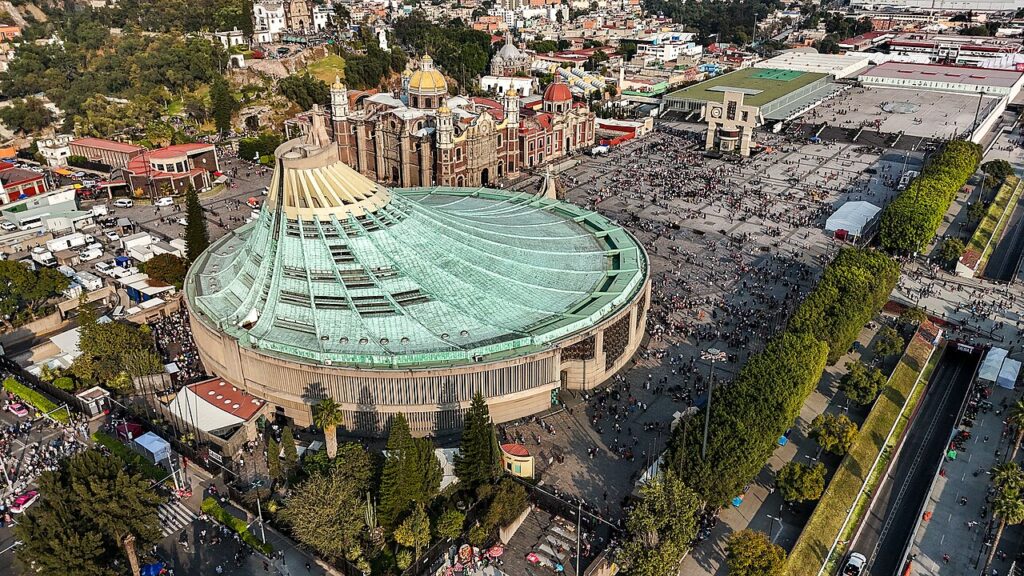
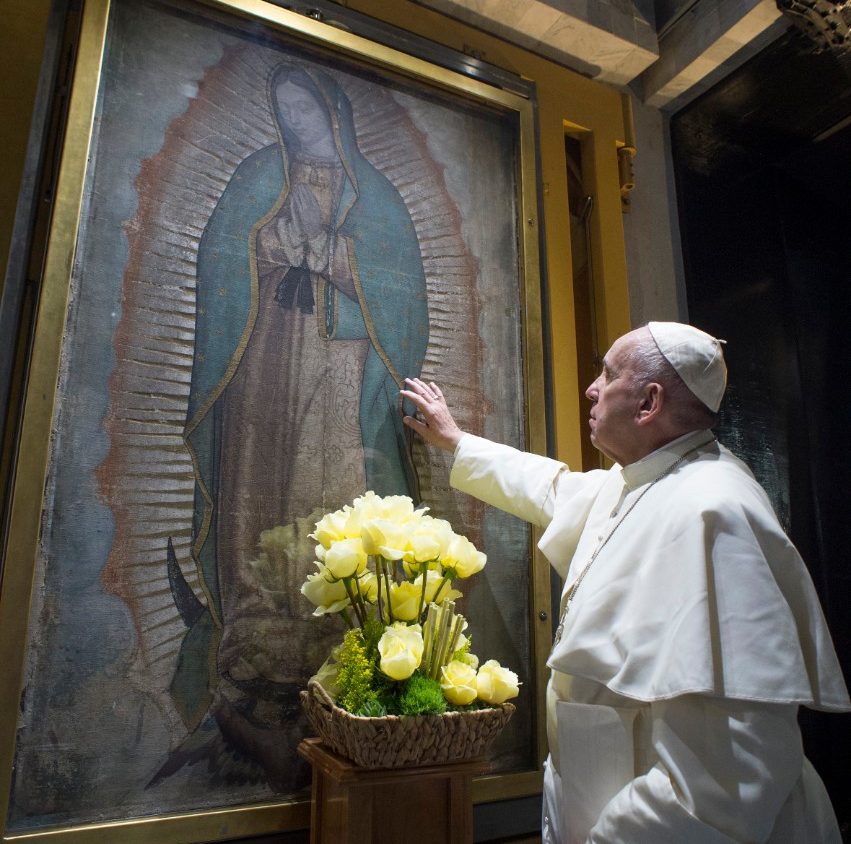
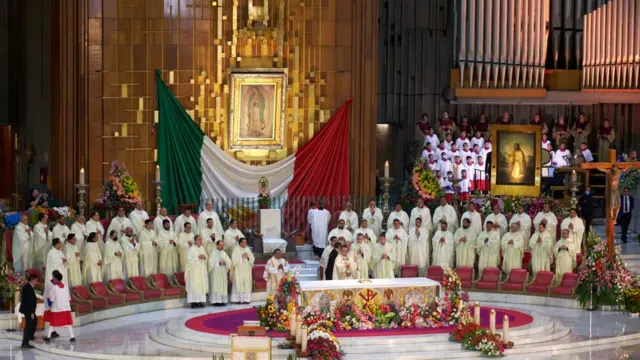
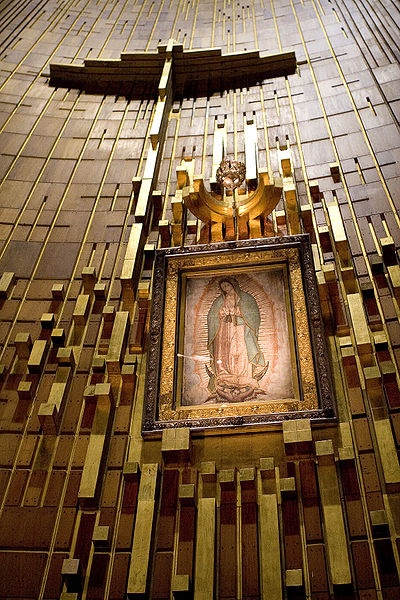
Located on Tepeyac Hill in Mexico City, it houses the venerated tilma (cloak) of Juan Diego, believed to bear the miraculous image of the Virgin Mary.
At Plannersy, we often feel that the Basilica carries a uniquely comforting presence. Pilgrims come here with hopes, prayers, gratitude, and stories of healing. The energy is warm, emotional, and deeply human. Whether you’re exploring faith, culture, or simply seeking peace, the basilica offers a powerful blend of spirituality and living tradition.
At a Glance – Quick Facts
| Feature | Details |
|---|---|
| Name | Basilica of Our Lady of Guadalupe |
| Location | Mexico City, Mexico |
| Religion | Christianity (Roman Catholic) |
| Annual Visitors | 20–25 million+ |
| Significance | Home to the miraculous image of Our Lady of Guadalupe |
| Founded | Old basilica: 1709; New basilica: 1976 |
| Architectural Style | Modern circular basilica with panoramic interior |
| Key Features | Tilma of Juan Diego, Tepeyac Hill, Old Basilica |
| Best Time to Visit | January–June or weekdays for comfortable crowd levels |
| UNESCO Status | Not listed |
| Entry Fee | Free entry |
History & Cultural Significance
According to Catholic tradition, in 1531, the Virgin Mary appeared four times to Juan Diego, an Indigenous convert, on Tepeyac Hill. She asked him to deliver her message to local bishops, and as proof of her presence, her image was miraculously imprinted on his tilma – a cloak made of cactus fibers.
This tilma, still preserved and displayed in the basilica, is central to the devotion of millions. The Virgin of Guadalupe became a powerful spiritual symbol for Mexico and Latin America, representing faith, protection, cultural identity, and unity.
Over time, the pilgrimage site expanded into a massive religious complex with churches, chapels, museums, and gardens.
Top Highlights (Facts & Distinctions)
- One of the most visited Catholic pilgrimage sites globally
- Home to the miraculous tilma, which has remained intact for nearly 500 years
- Central symbol of Mexican culture, Indigenous identity, and Christian devotion
- Circular basilica design ensures all visitors can view the image simultaneously
- The feast day on December 12 attracts millions in a single week
- Houses several historical structures including the Old Basilica and Tepeyac chapels
- Features moving walkways beneath the image to manage visitor flow respectfully
Major Sights & Experiences in the Basilica Complex
- The New Basilica – Circular design offering unobstructed views of the tilma
- The Tilma of Juan Diego – Displayed behind protective glass; centerpiece of devotion
- Old Basilica (Templo Expiatorio a Cristo Rey) – Baroque church dating to 1709
- Tepeyac Hill – Site of the Marian apparitions; home to the Chapel of the Hill
- Capilla del Pocito – Beautiful 18th-century chapel with sacred spring legends
- Capilla de las Rosas – Dedicated to the miracle of roses linked to the apparition
- The Marian Gardens – Peaceful walking paths and statues
- Basilica Museum – Exhibits on the apparitions, Indigenous culture, and Catholic history
Visitor Tips & Planning Advice
Best Time to Visit:
Weekdays and mornings for a peaceful experience; avoid the December 9–12 period unless you wish to witness the massive festival.
Dress Code:
Modest clothing recommended, though standards are more relaxed compared to European basilicas.
Viewing the Tilma:
Use the moving walkways to get multiple close-up views without blocking others.
Mass Services:
Held throughout the day in various languages; the atmosphere is reverent and welcoming.
Crowds:
Expect heavy footfall on weekends, feast days, and holidays.
Hydration & Weather:
Mexico City’s high altitude means sunnier days — carry water if exploring the hillside chapels.
Safety & Comfort:
The entire complex is well-secured and organized.
Comfortable walking shoes are essential due to the sloped paths and expansive grounds.
Photography:
Allowed in most areas except during ongoing Mass inside the basilica.
Nearby Sacred Sites & Experiences
- Tepeyac Hill Gardens – Scenic views and devotional statues
- La Villa District Markets – Souvenirs, rosaries, and local crafts
- Basilica Museum – Historic and spiritual artifacts
- Templo de las Capuchinas – Nearby Franciscan church
- Historic Center of Mexico City – Just a short ride away: Zócalo, Metropolitan Cathedral, museums
Plannersy’s Heartfelt Insight
“There’s a deep sense of reassurance inside the Basilica of Our Lady of Guadalupe. Many visitors describe it as a place where prayers feel heard – where something inside softens and opens. The blend of Indigenous and Christian heritage makes this site not just spiritually powerful, but culturally rich, heartfelt, and beautifully unifying.”
Ideal For
- Catholic pilgrims
- Travelers exploring Mexican history and heritage
- Families seeking spiritual trips
- Cultural travelers curious about sacred traditions
- Those needing quiet reflection or healing moments
Frequently Asked Questions (FAQs)
1. Is the Basilica free to visit?
Yes, entry to all main areas is completely free.
2. How long does a full visit take?
Typically 2–4 hours, depending on whether you climb Tepeyac Hill.
3. Can non-Catholics visit?
Absolutely. Visitors of all faiths are welcome.
4. When is the busiest time?
December 9–12 for the Feast of Our Lady of Guadalupe.
5. Can I attend Mass?
Yes — Mass is held several times daily and open to everyone.
6. Are guided tours available?
Yes, both official and private tours operate around the complex.
7. Is there wheelchair access?
The basilica is wheelchair-accessible; some hillside chapels may be challenging.
8. Can I purchase souvenirs nearby?
Yes. The surrounding streets have many vendors selling spiritual items.
9. Is the tilma original?
Believers regard it as the original miraculous cloak of Juan Diego; scientific studies often focus on its preservation and composition.
10. How do I reach the basilica from central Mexico City?
Metro, taxis, rideshare services, and buses all connect directly to the area.
7. Harmandir Sahib (Golden Temple) – Amritsar, India
The Harmandir Sahib, more widely known as the Golden Temple, is the spiritual heart of Sikhism and one of the most soul-stirring religious places on Earth.
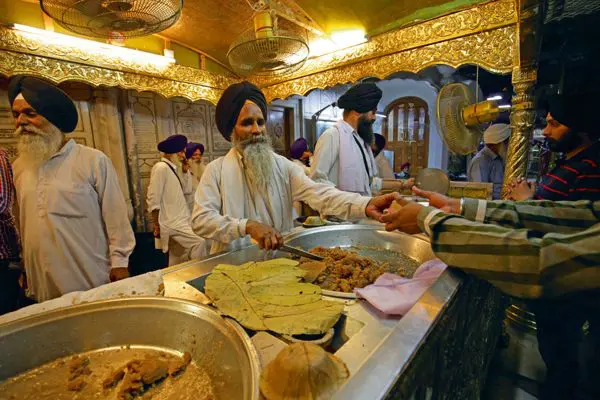
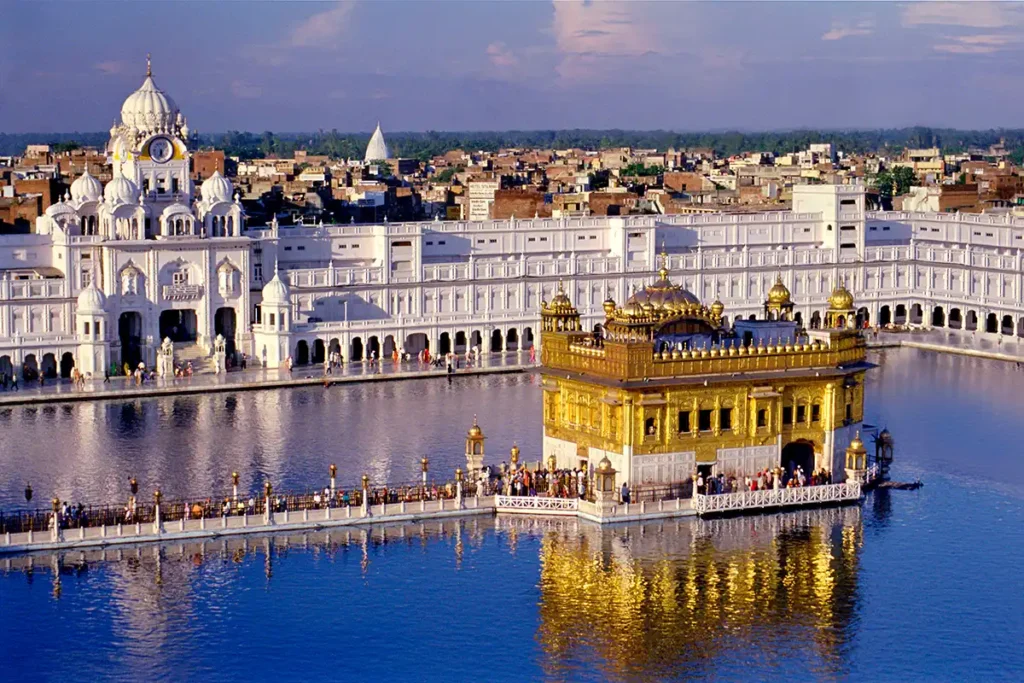
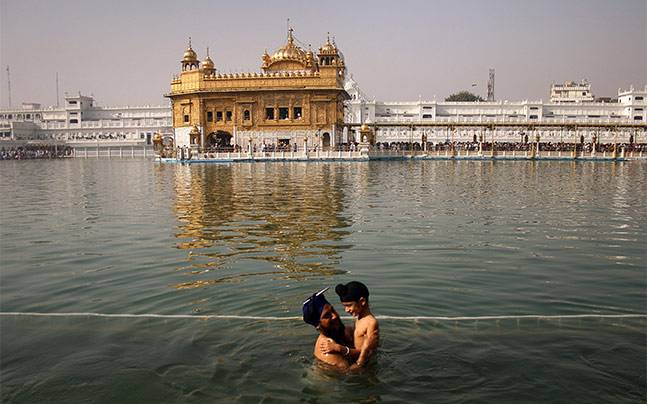
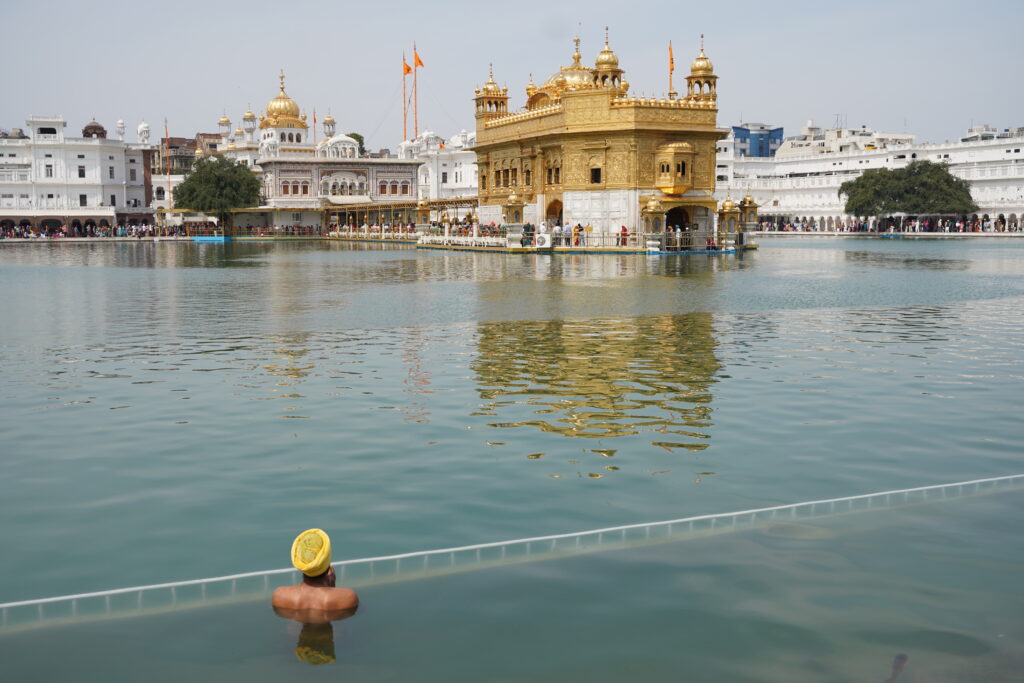
Nestled in the vibrant city of Amritsar, this shimmering shrine welcomes 6–10 million visitors annually, offering peace, equality, and community in an atmosphere unlike any other.
At Plannersy, we deeply admire the Golden Temple not just for its architectural beauty, but for its pure spirit of seva (selfless service). From the sacred sarovar to the melodious Gurbani echoing across the complex, this is a place where visitors feel embraced with warmth and equality – no matter who they are or where they come from. The world-famous Langar, which serves free meals to everyone, reflects humanity at its best.
Team Plannersy
At a Glance – Quick Facts
| Feature | Details |
|---|---|
| Name | Harmandir Sahib (Golden Temple) |
| Location | Amritsar, Punjab, India |
| Religion | Sikhism |
| Annual Visitors | 6–10 million+ |
| Founded | Begun in 1581; completed in 1604 |
| Architectural Style | Sikh architecture with gold-covered sanctum |
| Key Features | Amrit Sarovar, Langar Hall, Akal Takht, Darshani Deori |
| Significance | Most sacred gurdwara; houses the Guru Granth Sahib |
| Best Time to Visit | Early mornings or evening prayers |
| Entry Fee | Free for all |
| Open Hours | Open nearly 24 hours |
History & Cultural Significance
The foundation of Harmandir Sahib was laid by Guru Arjan, the fifth Sikh Guru, with a vision of creating a place where all people – irrespective of caste, religion, or status – could worship freely. The temple was built lower than the surrounding city structure, symbolizing humility.
In 1604, the Guru Granth Sahib, Sikhism’s holy scripture, was installed here. Over time, the temple became a powerful symbol of Sikh identity and resilience, enduring historical conflicts and being rebuilt with devotion.
The gilding of the upper floors – which gives the temple its iconic golden appearance – was carried out in the early 19th century under Maharaja Ranjit Singh.
Today, the Golden Temple stands as a beacon of peace, service, openness, and unity.
Top Highlights (Facts & Distinctions)
- One of the most visited pilgrim sites in India and globally
- Home to the Guru Granth Sahib, the eternal Guru of Sikhism
- The Langar (community kitchen) serves 100,000+ free meals daily
- The complex is open nearly 24 hours, welcoming all visitors
- A serene holy pool (Amrit Sarovar) surrounds the golden sanctum
- The temple is designed with four entrances – symbolizing universal acceptance
- Sublime live kirtan (devotional music) fills the entire complex day and night
Major Sights & Experiences in the Golden Temple Complex
- The Golden Sanctum (Harmandir Sahib) – The shimmering heart of the complex
- Amrit Sarovar – Sacred pool believed to have healing spiritual significance
- Guru Granth Sahib Darshan – Reverent viewings of the holy scripture
- Langar Hall – Largest free community kitchen in the world
- Akal Takht – Seat of Sikh temporal authority
- Darshani Deori – Iconic gateway leading to the causeway
- Central Sikh Museum – Exhibits on Sikh history and martyrs
- Night Palki Sahib Ceremony – A moving ritual where the Guru Granth Sahib is carried at night to Akal Takht
- Morning Japji Sahib & Kirtan – Immersive devotional experiences
Visitor Tips & Planning Advice
Dress Code:
Head covering is mandatory; scarves are available at the entrance. Modest clothing is recommended.
Footwear:
Remove shoes and wash your feet in the running water channels before entry.
Best Time to Visit:
Early morning (4–7 AM) for peaceful Gurbani and sunrise reflections on the gold. Evenings are magical too.
Langar:
Don’t miss the community meal — it is free, sacred, and prepared with immense love.
Respectful Conduct:
Photography is allowed in most outside areas but restricted inside the sanctum. Quiet behavior is expected near the holy scripture.
Waiting Time:
Queues for entering the golden sanctum can range from 30 minutes to 2+ hours during peak periods.
Accessibility:
Wheelchairs are available, and the complex is largely accessible.
Water & Cleanliness:
The grounds are impeccably maintained; clean drinking water stations are available.
Nearby Sacred Sites & Experiences
- Jallianwala Bagh Memorial – 5-minute walk
- Akal Takht & Sikh Parliament – Within complex
- Gobindgarh Fort – Cultural performances and exhibits
- Hall Bazaar – Souvenirs, Punjabi crafts, and street food
- Partition Museum – Emotionally powerful historical museum
Plannersy’s Heartfelt Insight
“Harmandir Sahib is more than a temple – it feels like an embrace. The sound of kirtan floating over the water, volunteers serving langar with devotion, and pilgrims bowing with pure sincerity create an energy that touches the soul. Visitors often describe the Golden Temple as a place where the heart feels light, nourished, and quietly transformed.”
Ideal For
- Pilgrims and spiritual travelers
- Cultural and heritage explorers
- Families looking for uplifting experiences
- Solo travelers seeking peace
- First-time India travelers wanting meaningful experiences
Frequently Asked Questions (FAQs)
1. Is the Golden Temple free to visit?
Yes – entry, langar, and most services are completely free.
2. What is the best time to visit?
Early mornings or evenings for a serene atmosphere.
3. Is the Langar safe for international visitors?
Yes – it is clean, hygienic, and deeply respected.
4. Can non-Sikhs enter?
Absolutely. Everyone is welcome.
5. How long does a full visit take?
2–4 hours, or longer if you want to experience the ceremonies.
6. Do I need to cover my head?
Yes – scarves are provided free.
7. Are cameras allowed?
Yes, in the outer areas; not inside the inner sanctum.
8. Is there a dress code?
Modest clothing, covered head, and bare feet.
9. Can I stay overnight?
Yes – certain accommodations for pilgrims exist, with basic facilities.
10. What is the Langar experience like?
Simple, nourishing, and deeply meaningful – a highlight for most visitors.
8. Church of the Holy Sepulchre – Jerusalem, Israel
The Church of the Holy Sepulchre is one of the holiest and most historically significant Christian sites in the world. Located in the Old City of Jerusalem, it is revered as the place where Jesus Christ was crucified (Golgotha), buried, and resurrected – making it the spiritual epicenter for millions of Christians across denominations.
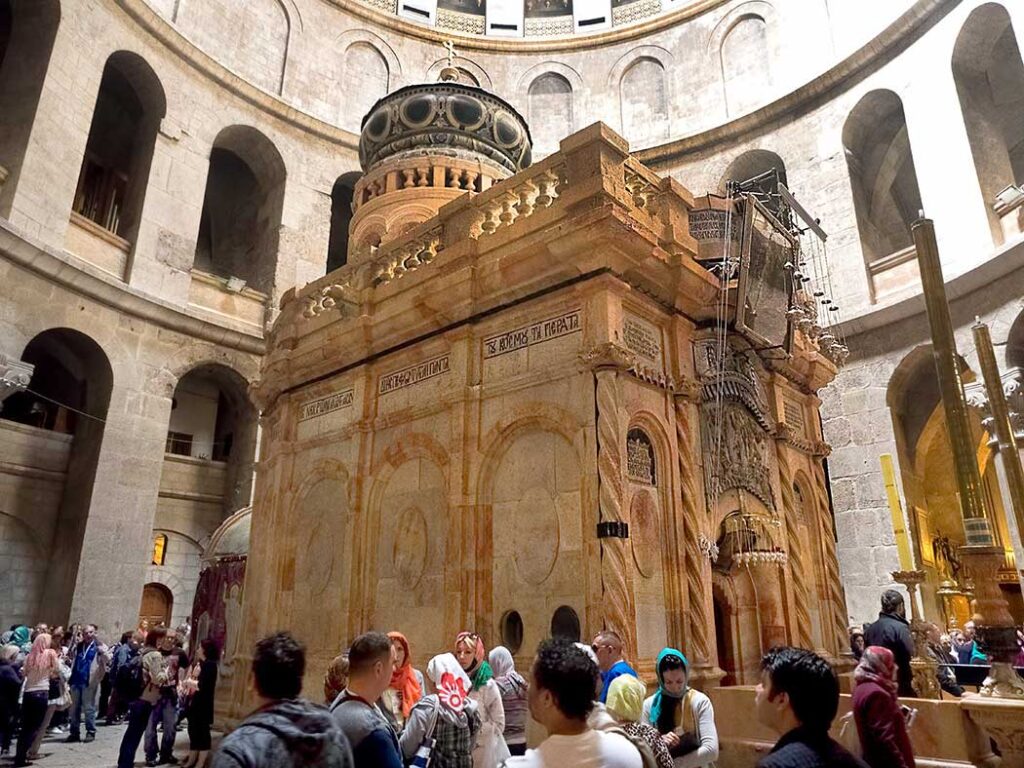
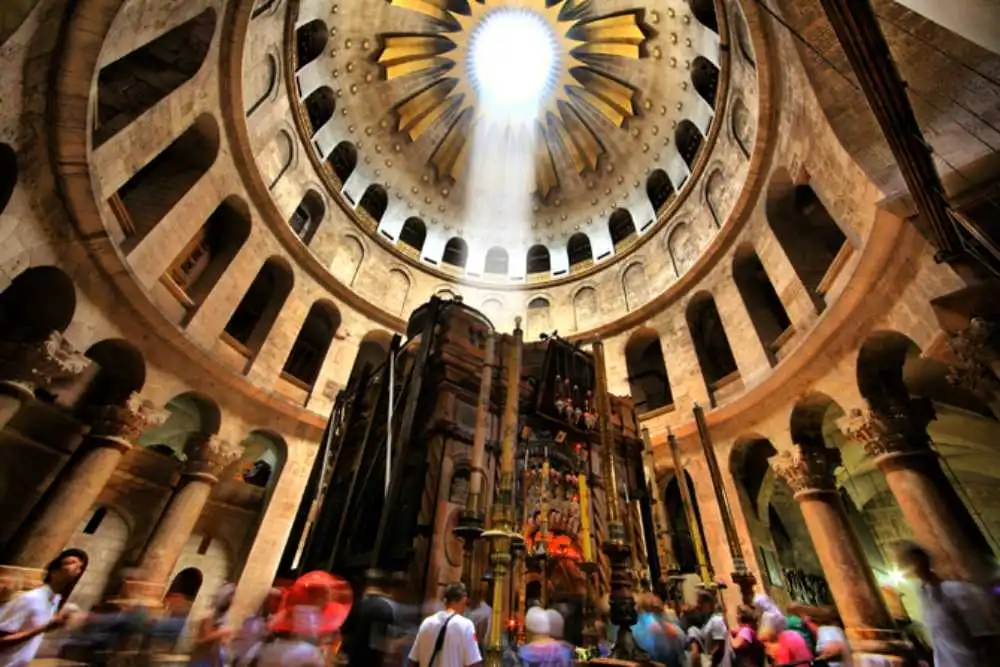
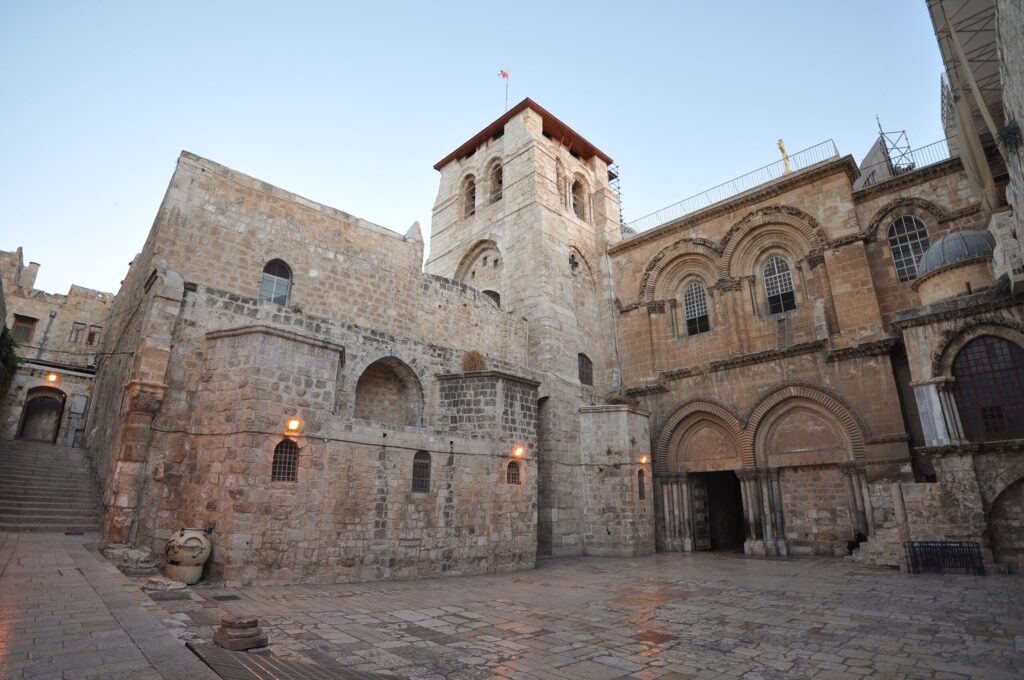
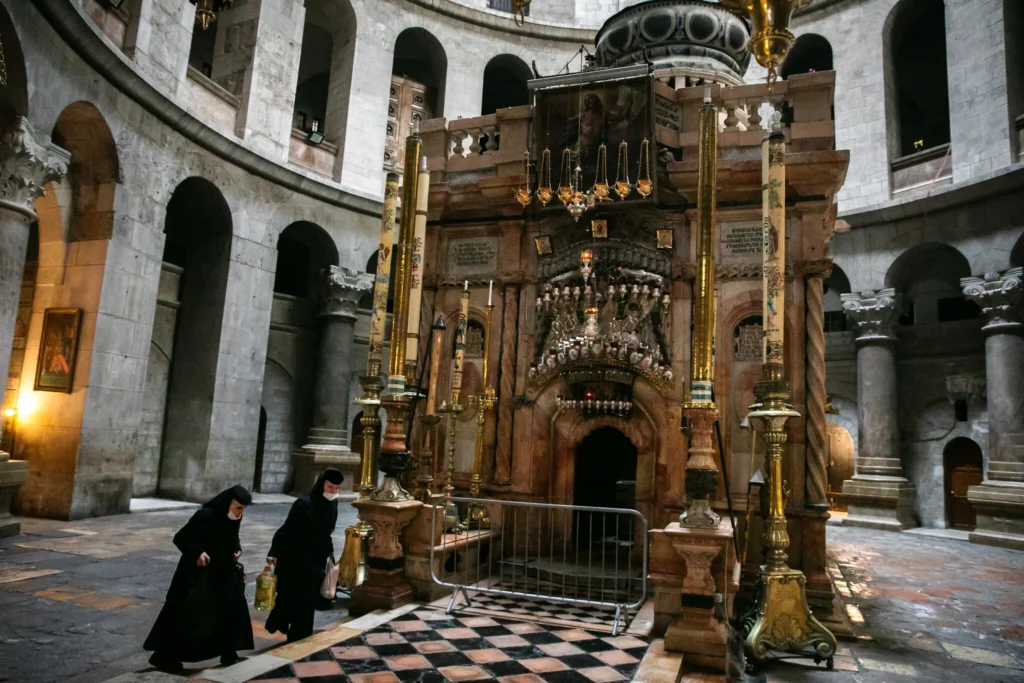
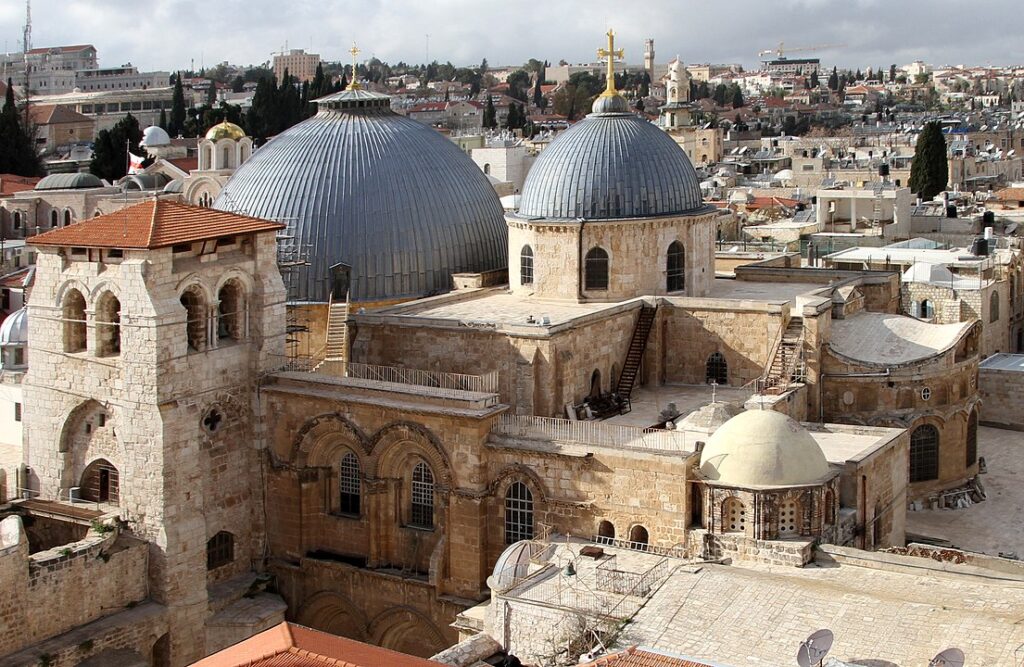
With millions of visitors annually, the church is not just a place of pilgrimage but a living mosaic of ancient traditions, emotions, and devotion. At Plannersy, we often feel that the Holy Sepulchre stands as a meeting point of history and faith – its stones echoing centuries of prayer, struggle, hope, and spiritual transformation. This is a sacred space where visitors often describe feeling a profound stillness, despite the constant flow of pilgrims.
At a Glance – Quick Facts
| Feature | Details |
|---|---|
| Name | Church of the Holy Sepulchre |
| Location | Old City, Jerusalem |
| Religion | Christianity (shared among several denominations) |
| Annual Visitors | Millions (estimated 3–4 million+) |
| Founded | 326 CE (original), restored and rebuilt multiple times |
| Architectural Style | Romanesque, Byzantine, Crusader influences |
| Key Features | Golgotha/Calvary, Aedicule, Stone of Anointing |
| Significance | Site of Jesus’ crucifixion, burial, and resurrection |
| Best Time to Visit | Early morning or late afternoon |
| Entry Fee | Free |
| Managed By | Greek Orthodox, Roman Catholic, Armenian Apostolic Church |
History & Cultural Significance
The origins of the Holy Sepulchre trace back to Emperor Constantine, who ordered the construction of a grand church in the 4th century after his mother, St. Helena, identified the site as the location of Jesus’ crucifixion and tomb.
Over nearly 17 centuries, the church has witnessed invasions, fires, earthquakes, and reconstructions – yet it remains one of the most revered Christian shrines on Earth.
The church is unique in that it is jointly administered by multiple Christian denominations, each preserving ancient rituals and liturgies. Despite the complexities, the shared stewardship adds to the spiritual richness of this sacred space.
Top Highlights (Facts & Distinctions)
- One of the holiest Christian pilgrimage sites globally
- Believed to encompass Golgotha, where Jesus was crucified
- Houses the Aedicule, the shrine of the Holy Tomb
- The Stone of Anointing is where Jesus is said to have been prepared for burial
- Shared by six Christian denominations, each with longstanding traditions
- Site of the ancient Holy Fire ceremony celebrated annually before Easter
- Features centuries-old chapels, icons, mosaics, and relics
Major Sights & Experiences Inside the Church
- Golgotha (Calvary) – Chapel marking the site of Jesus’ crucifixion
- The Aedicule (Holy Tomb) – The sacred chamber containing the tomb of Christ
- Stone of Anointing – A deeply venerated slab where Jesus’ body was prepared
- Rotunda & Dome – The grand space encircling the tomb
- Chapel of St. Helena – Linked to the discovery of the True Cross
- Chapel of the Angel – Entry to the tomb chamber
- Armenian, Greek Orthodox, and Catholic Chapels – Each with unique rituals
- Room of the Longinus – Symbolic memory of the Roman soldier
- Franciscan Chapel of the Crucifixion – Site of devotion by Catholic pilgrims
Visitor Tips & Planning Advice
Best Time to Visit:
Arrive early (~6–8 AM) or late afternoon to avoid heavy crowds.
Dress Code:
Modest clothing (shoulders and knees covered) is required.
Lines for the Aedicule:
Expect waiting times of 30 minutes to several hours during peak seasons.
Respect the Quiet:
Pilgrims come here for prayer – move gently and speak softly.
Guided Tours:
Highly recommended due to the church’s complex structure and layered history.
Footwear:
Wear comfortable shoes – the floors are worn and uneven in some places.
Peak Seasons:
Holy Week and Easter draw extremely large crowds.
Accessibility:
Some areas involve steps and narrow corridors; wheelchair access is limited.
Photography:
Allowed in most areas except during liturgical ceremonies.
Nearby Sacred & Historic Sites
- Via Dolorosa – Traditional route of Christ’s final walk
- Western Wall Plaza – A deeply sacred Jewish site (visible from a distance if following your preference to avoid Muslim sites for now)
- Mount Zion – Cenacle (Last Supper Room) and King David’s Tomb
- Christian Quarter Market – Narrow alleys filled with handicrafts
- Tower of David Museum – History of Jerusalem
Plannersy’s Heartfelt Insight
“The Church of the Holy Sepulchre is a place where time feels suspended. Visitors often describe a quiet, overwhelming emotion when standing before the Aedicule or touching the Stone of Anointing. Despite its crowds and centuries of layered history, the church radiates a raw, unfiltered sacredness — one that humbles, comforts, and connects deeply with the heart.”
Ideal For
- Christian pilgrims
- History and archaeology lovers
- Cultural and heritage travelers
- Families exploring Jerusalem
- Spiritual seekers across all backgrounds
Frequently Asked Questions (FAQs)
1. Is entry to the Church free?
Yes – the church does not charge visitors.
2. How long does a visit take?
1–3 hours depending on crowds and whether you enter the Holy Tomb.
3. Are non-Christians welcome?
Yes. The church is open to visitors of all faiths.
4. What is the best time to avoid long lines?
Early morning or late afternoon.
5. Can I attend Mass here?
Yes – several denominations conduct daily services.
6. Is photography allowed?
Yes, except during certain religious ceremonies.
7. Is there a dress code?
Modest clothing is expected.
8. Why is the church shared by multiple denominations?
A historic arrangement called the “Status Quo” ensures shared management.
9. Can I touch the Stone of Anointing?
Yes – many visitors touch it, pray, or place rosaries on it.
10. Is it safe for solo travelers?
Yes. The Old City is busy, well-monitored, and filled with tourists.
9. Shwedagon Pagoda – Yangon, Myanmar
The Shwedagon Pagoda, rising like a golden flame above Yangon’s skyline, is one of the most sacred Buddhist sites in the entire world. Draped in gold plates and encrusted with thousands of diamonds and gemstones, this 2,500-year-old pagoda is believed to enshrine relics of four Buddhas, making it a deeply revered spiritual anchor for millions of Buddhists.
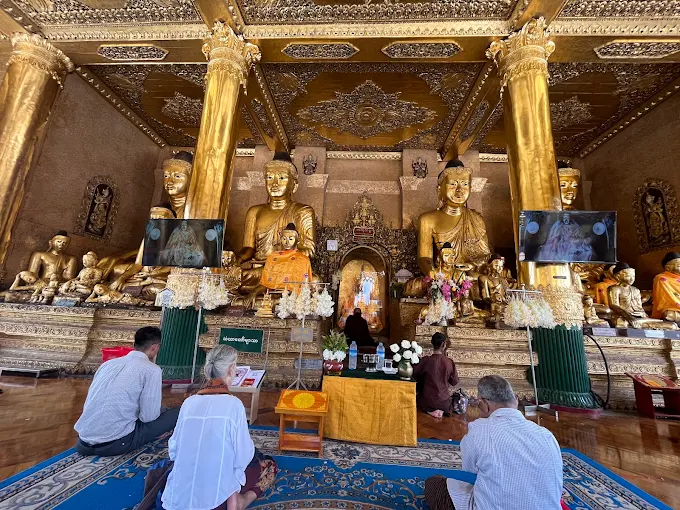
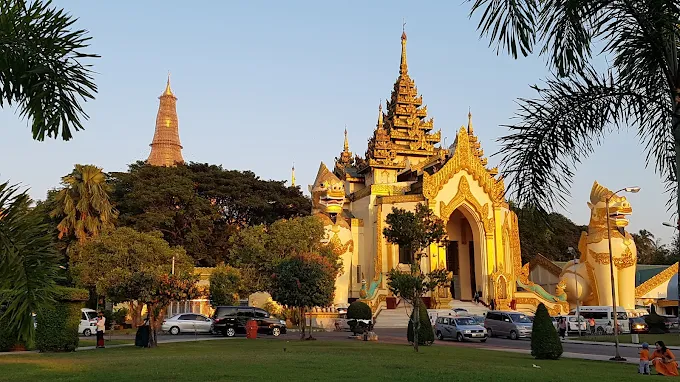
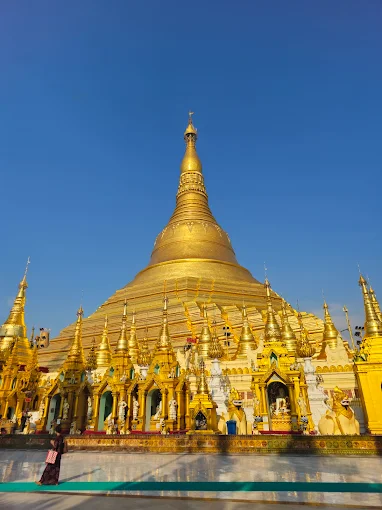
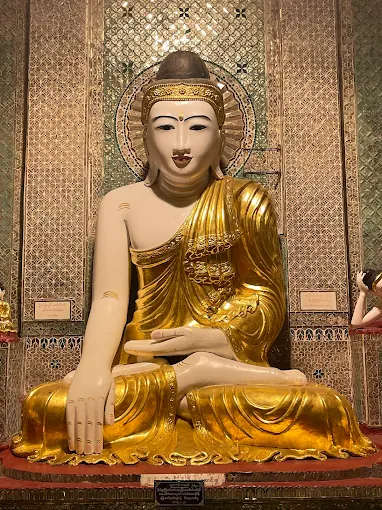
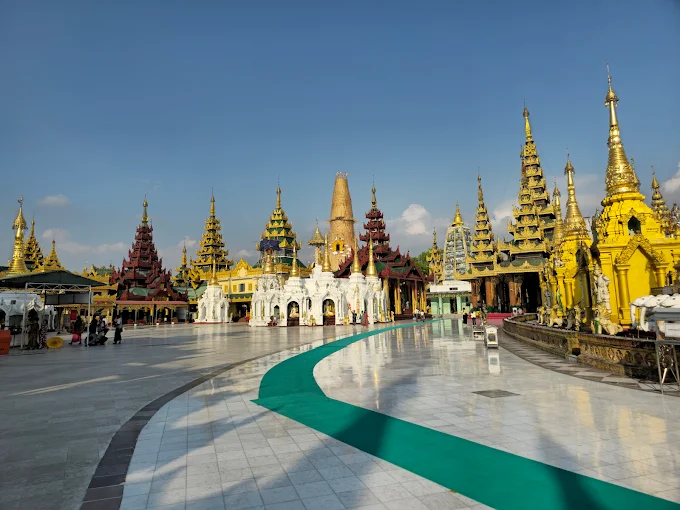
With 8–10 million visitors annually, Shwedagon is not only a religious landmark – it is a living, breathing spiritual sanctuary. At Plannersy, we believe this pagoda isn’t just seen; it’s felt. The scent of incense, the glow of oil lamps, the serene chanting, and devotees circling the stupa with gentle devotion create an atmosphere of peace that touches even first-time visitors.
At a Glance – Quick Facts
| Feature | Details |
|---|---|
| Name | Shwedagon Pagoda |
| Location | Yangon, Myanmar |
| Religion | Buddhism (Theravada) |
| Annual Visitors | 8–10 million+ |
| Founded | Traditionally dated to 6th century BCE |
| Architectural Style | Stupa-style Buddhist architecture |
| Key Features | Main stupa, relic chambers, planetary posts, shrines |
| Significance | Enshrines sacred relics of Gautama Buddha and past Buddhas |
| Best Time to Visit | At sunrise or sunset |
| Entry Fee | Yes, for international visitors |
| Altitude | Built on Singuttara Hill |
History & Cultural Significance
Shwedagon’s origins are steeped in legend: two merchant brothers, Taphussa and Bhallika, are said to have met Gautama Buddha shortly after his enlightenment and received eight strands of his hair as sacred relics. These were enshrined atop Singuttara Hill along with relics of earlier Buddhas.
Over centuries, the pagoda underwent multiple restorations due to earthquakes, fires, and natural aging. Monarchs frequently donated gold plates and ornaments, which evolved into the breathtaking structure we see today – one adorned with:
- over 27 metric tons of gold,
- 5,400 diamonds,
- 1,300 rubies,
- and a spectacular diamond orb topping the stupa.
Shwedagon is not just a monument; it remains a vibrant center of meditation, offerings, and Buddhist festivals.
Top Highlights (Facts & Distinctions)
- Considered the most sacred Buddhist pagoda in Myanmar
- The central stupa is coated in layers of real gold
- Crowned with a 76-carat diamond at its very top
- Houses relics of four Buddhas, a rarity in Buddhist architecture
- Perimeter features planetary posts tied to Burmese astrology
- Frequent site for Buddhist ceremonies, meditation gatherings, and offerings
- The structure glows differently throughout the day – especially stunning at sunset
Major Sights & Experiences Within the Complex
- Main Stupa – The radiant centerpiece rising 99 meters high
- Planetary Posts – Devotional stations associated with your day of birth
- Meditation Platforms – Peaceful areas where locals quietly sit in reflection
- Bodhi Tree – Sacred tree grown from a cutting of the Bodh Gaya tree
- Shrines & Pavilions – Each with its own statues, offerings, and rituals
- Bells & Hti (Umbrella Structure) – Ornamental marvels with spiritual symbolism
- Sunset Viewpoints – Magical light transforming the gold surfaces
- Evening Oil-Lamp Offerings – A deeply calming ritual experience
Visitor Tips & Planning Advice
Dress Code:
Shoulders and knees must be covered for both men and women.
Footwear:
Shoes and socks must be removed before entering the pagoda precinct.
Best Time to Visit:
Sunrise for peaceful meditation, or sunset for golden and twilight hues.
Entrance Gates:
There are four main entrances – elevators are available for easier access.
Photography:
Allowed in most areas, but be respectful of worshippers.
Walk Clockwise:
Follow Buddhist tradition by moving clockwise around the stupa.
Heat & Comfort:
The marble floors can get warm; early morning visits help avoid discomfort.
Atmosphere:
Even outside festivals, the site is lively with devotees, monks, and families.
Safety:
Very safe, serene, and welcoming – a place where visitors naturally slow down.
Nearby Sacred & Cultural Attractions
- Chaukhtatgyi Buddha Temple – Home to a gigantic reclining Buddha
- Kandawgyi Lake – Scenic waters and parks
- Sule Pagoda – Another historic Buddhist stupa within the city center
- National Museum of Myanmar – Cultural heritage and artifacts
- Bogyoke Aung San Market – Handicrafts, textiles, and local art
Plannersy’s Heartfelt Insight
“Shwedagon Pagoda feels like a spiritual sunrise in itself. Whether you’re watching the first rays of daylight catch the golden dome or listening to soft chanting under a sky turning crimson, the pagoda has a way of quieting the mind and opening the heart. Visitors often say that time feels slower here — like the world pauses for a moment of peace.”
Ideal For
- Buddhist pilgrims
- Spiritual seekers and meditators
- Cultural explorers
- Photography lovers
- Travelers seeking calm, reflective experiences
Frequently Asked Questions (FAQs)
1. Is Shwedagon Pagoda open daily?
Yes – it is open early morning until late night.
2. Is there an entry fee?
Yes, for international visitors; locals enter free.
3. How long should I spend here?
1.5 to 3 hours is ideal for a meaningful visit.
4. Can I meditate at the pagoda?
Absolutely – there are designated quiet areas.
5. Is it safe for solo travelers?
Yes – it’s one of the safest areas in Yangon.
6. What should I wear?
Modest clothing covering shoulders and knees.
7. Can I bring children?
Yes – families visit frequently.
8. When is the most beautiful time to visit?
Sunset hours, when the pagoda glows intensely.
9. Are guided tours available?
Yes – local guides offer insightful cultural and historical explanations.
10. Why is the pagoda considered so sacred?
It enshrines relics of multiple Buddhas and has been a center of devotion for over two millennia.
10. Meiji Shrine – Tokyo, Japan
Meiji Shrine (Meiji Jingu), nestled in a lush forested area in the heart of Tokyo, is one of Japan’s most important Shinto shrines. Dedicated to Emperor Meiji and Empress Shoken, it attracts 3–4 million visitors annually, especially during New Year celebrations. The shrine blends spiritual serenity with cultural significance, offering a peaceful escape from the city’s urban hustle.
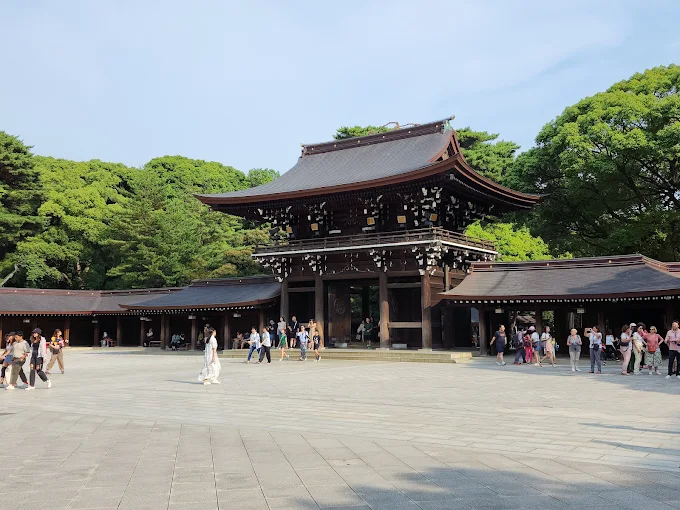
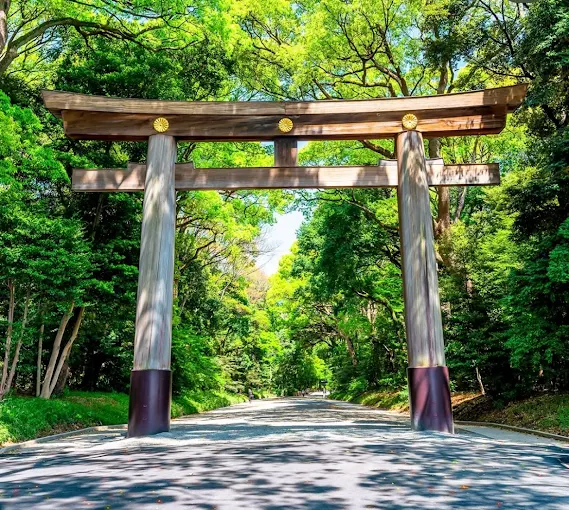
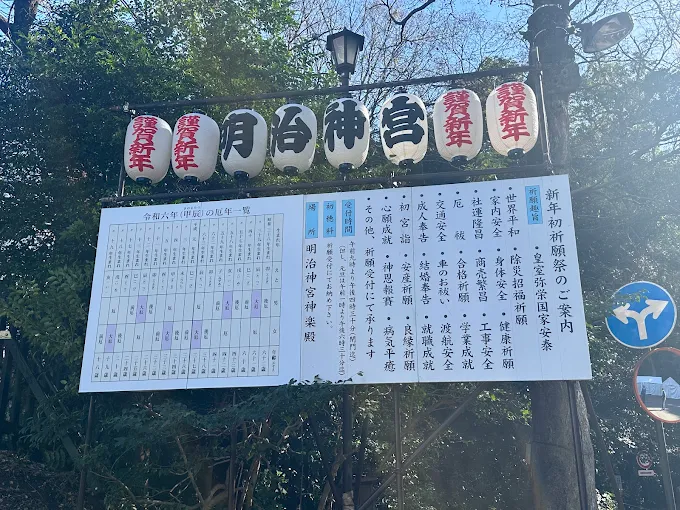
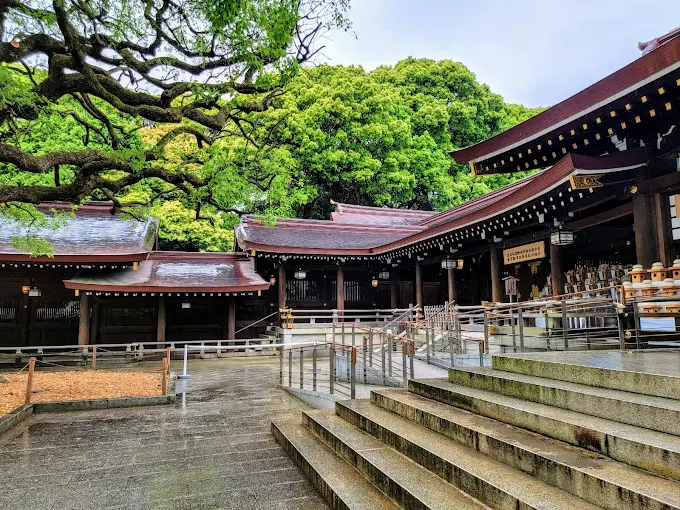
At Plannersy, we often describe Meiji Shrine as a place where nature, tradition, and spirituality intersect harmoniously. Walking through the towering torii gates and shaded pathways, visitors feel a sense of calm and reflection, even in the midst of bustling Tokyo. The shrine offers both a spiritual experience for worshippers and an immersive cultural journey for all visitors.
At a Glance – Quick Facts
| Feature | Details |
|---|---|
| Name | Meiji Shrine (Meiji Jingu) |
| Location | Shibuya, Tokyo, Japan |
| Religion | Shinto |
| Annual Visitors | 3–4 million+ |
| Founded | 1920 (dedicated to Emperor Meiji & Empress Shoken) |
| Architectural Style | Traditional Shinto |
| Key Features | Main shrine hall, torii gates, forested grounds, sacred sake barrels |
| Significance | Honors Japan’s Meiji Emperor and Empress; spiritual center for Shinto |
| Best Time to Visit | Early morning or New Year for cultural experience |
| Entry Fee | Free |
History & Cultural Significance
Meiji Shrine was established to honor Emperor Meiji, who led Japan through a period of modernization, and Empress Shoken, known for her charitable work. Construction began in 1915 and was completed in 1920, reflecting traditional Shinto architectural principles.
The shrine sits within a 7-hectare evergreen forest, planted with over 100,000 trees donated from across Japan. It serves as a spiritual sanctuary, hosting rituals, festivals, and ceremonies such as weddings, New Year celebrations, and seasonal festivals.
Top Highlights (Facts & Distinctions)
- One of Japan’s most visited Shinto shrines
- Famous for its majestic torii gates and serene forested approach
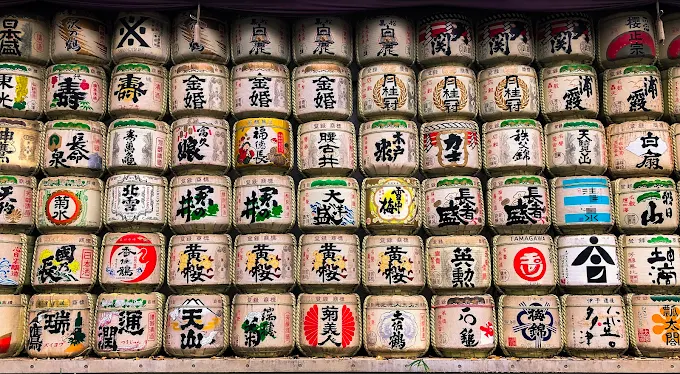
- Houses sacred sake barrels and wine barrels as offerings
- Hosts annual festivals, including New Year celebrations and Shinto weddings
- Center for traditional Japanese cultural experiences, including prayer rituals
- Peaceful walking trails within the shrine grounds, a calm oasis in Tokyo
Major Sights & Experiences
- Main Shrine Hall (Honden) – Traditional Shinto architecture where prayers are offered
- Torii Gates – Iconic large wooden gates marking the sacred path
- Forest Trails – 7-hectare park perfect for serene walks
- Sake Barrels (Kazaridaru) – Decorative barrels offered to the shrine by breweries
- Wine Barrels (Shinshu Meiji Wine) – Symbolic of cultural and spiritual offerings
- Treasure Museum – Displays imperial artifacts and shrine history
- Shinto Weddings – Visitors can observe traditional Japanese ceremonies
- Festivals & Seasonal Events – Especially during New Year and Autumn
Visitor Tips & Planning Advice
Best Time to Visit:
Early morning for tranquility, or late December to January for New Year celebrations.
Dress Code:
No strict requirement; modest, comfortable clothing is recommended for walking and visiting the shrine.
Footwear:
No removal required except when entering inner prayer halls.
Photography:
Allowed outdoors; avoid photography during rituals unless permitted.
Crowds:
New Year (Hatsumode) is extremely crowded; weekdays are quieter.
Accessibility:
Paths are mostly flat; suitable for wheelchairs and strollers.
Special Experiences:
- Participate in traditional prayer rituals
- Write wishes on ema (wooden plaques)
- Observe Shinto wedding ceremonies
Nearby Cultural & Sacred Sites
- Yoyogi Park – Expansive parkland connecting to the shrine
- Harajuku District – Vibrant shopping and cultural area nearby
- Omotesando Avenue – Modern architecture and shopping street
- Takeshita Street – Youth culture and local snacks
- Shinjuku Gyoen National Garden – Beautiful Japanese landscape gardens
Plannersy’s Heartfelt Insight
“Meiji Shrine is a quiet sanctuary amidst the urban rush. Walking beneath the towering torii gates, feeling the soft rustle of the forest, and observing worshippers’ rituals, visitors often leave with a sense of calm, reflection, and subtle inspiration. It’s a perfect place to connect with Japanese culture and spiritual energy simultaneously.”
Ideal For
- Shinto pilgrims and spiritual seekers
- Cultural travelers exploring Japanese traditions
- Families and solo travelers seeking tranquility
- Photography enthusiasts capturing nature and architecture
- Visitors looking for an urban escape into serenity
Frequently Asked Questions (FAQs)
1. Is entry to Meiji Shrine free?
Yes – the shrine grounds are free to enter.
2. Can non-Japanese visitors participate in rituals?
Yes, all are welcome to observe or participate respectfully.
3. How long should I plan for a visit?
1–2 hours for the main shrine and forest trails; longer for festivals.
4. Is it crowded during New Year?
Yes – millions visit for Hatsumode.
5. Are guided tours available?
Yes, both official and private guides offer cultural and historical insights.
6. Can I take photos?
Yes, except during certain rituals or ceremonies.
7. Are there places to eat nearby?
Yes – cafes and restaurants are available around Harajuku.
8. Is it accessible for wheelchairs and strollers?
Yes – mostly flat paths, with ramps available.
9. Can I witness Shinto weddings?
Yes – traditional ceremonies are often visible to visitors.
10. What is the best season to visit?
Spring for cherry blossoms, Autumn for colorful foliage, or New Year for cultural festivities.
11. Borobudur Temple – Central Java, Indonesia
Borobudur Temple, located in Central Java, Indonesia, is the largest Buddhist temple in the world and a UNESCO World Heritage site. Built in the 9th century during the Sailendra dynasty, Borobudur attracts 2–3 million visitors annually who come to marvel at its intricate carvings, stupas, and spiritual significance.
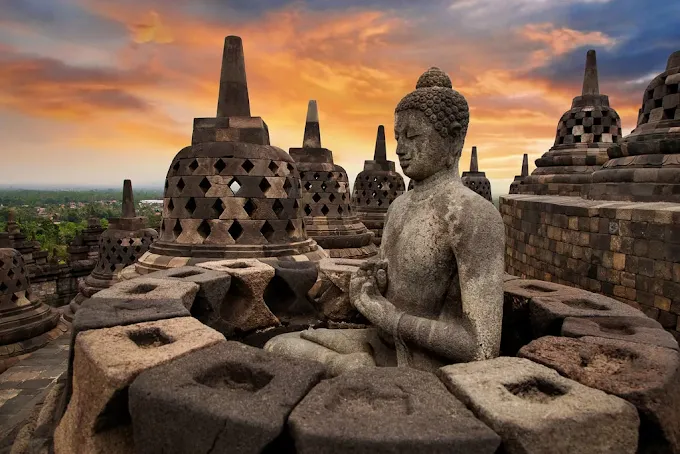
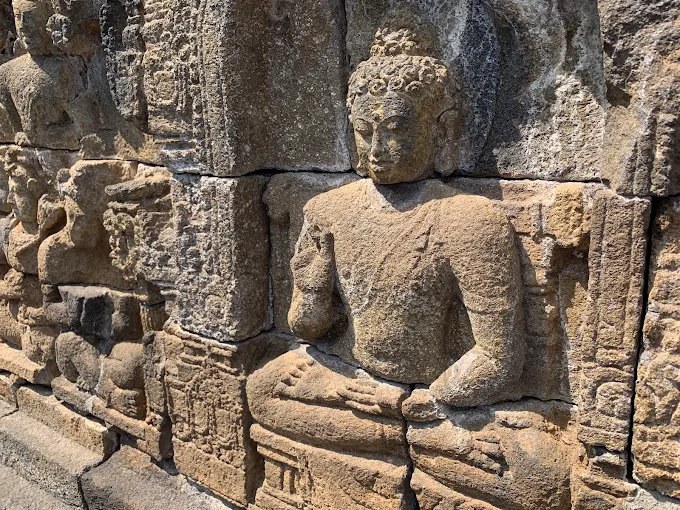
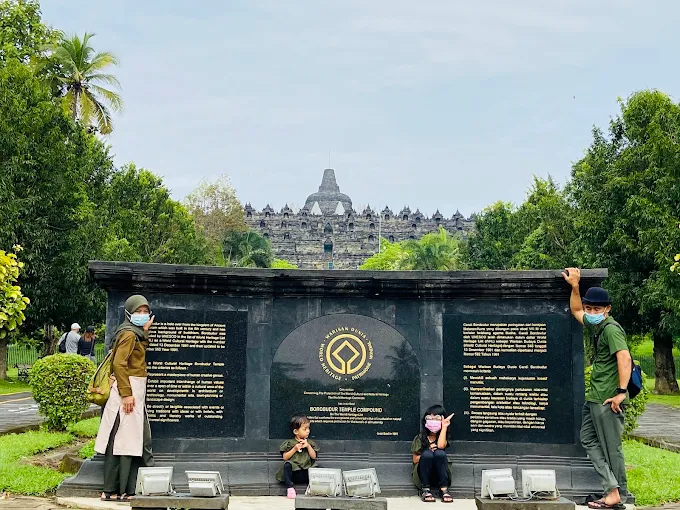
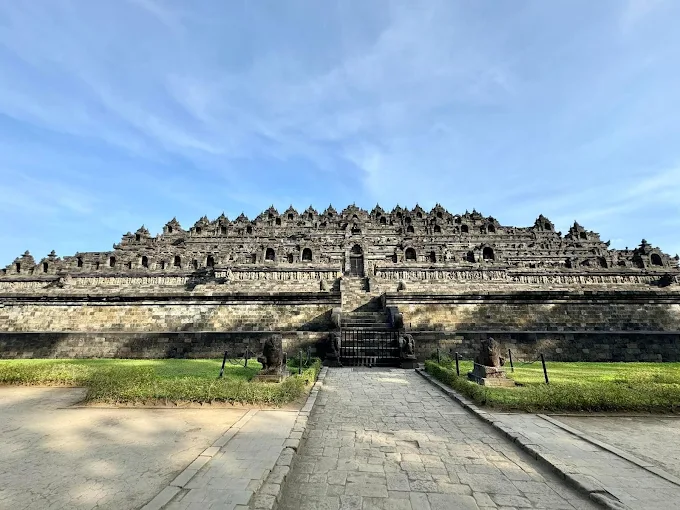
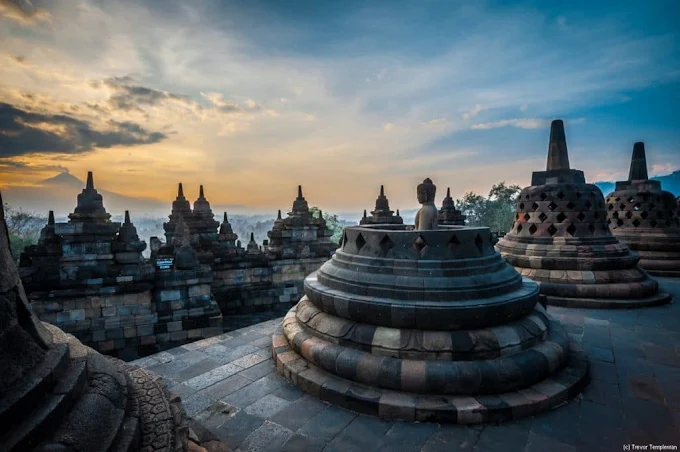
At Plannersy, we often describe Borobudur as a temple that awakens both the mind and soul. Its tiered structure, symbolic of the Buddhist cosmology, combined with serene morning mist and the chanting of monks, creates an immersive and contemplative atmosphere. Visitors often leave feeling both enlightened and inspired by the artistry and devotion preserved across centuries.
At a Glance — Quick Facts
| Feature | Details |
|---|---|
| Name | Borobudur Temple |
| Location | Central Java, Indonesia |
| Religion | Buddhism |
| Annual Visitors | 2–3 million+ |
| Built | 9th century (Sailendra dynasty) |
| Architectural Style | Javanese Buddhist architecture; stupa-style pyramid |
| Key Features | Central stupa, 504 Buddha statues, 2,672 relief panels |
| Significance | Largest Buddhist temple; UNESCO World Heritage site |
| Best Time to Visit | Early morning for sunrise |
| Entry Fee | Around IDR 350,000 (~$23 USD) for international visitors |
History & Cultural Significance
Borobudur was constructed as a pilgrimage monument designed to guide devotees through the path from Kamadhatu (world of desires), through Rupadhatu (world of forms), to Arupadhatu (world of formlessness). Its nine stacked platforms are decorated with 2,672 relief panels depicting Buddhist teachings and 504 Buddha statues, with the central stupa symbolizing ultimate enlightenment.
Over centuries, the temple was abandoned due to volcanic eruptions and jungle overgrowth but was restored in the 19th and 20th centuries, preserving its status as a global spiritual and cultural treasure.
Top Highlights (Facts & Distinctions)
- Largest Buddhist temple in the world
- Contains 2,672 narrative relief panels illustrating Buddhist teachings
- Features 504 Buddha statues, many seated inside perforated stupas
- UNESCO World Heritage site since 1991
- Sunrise visits offer spectacular views over the surrounding volcanoes and lush valleys
- Architectural symbolism mirrors the journey toward enlightenment
- Pilgrimage route: circumambulation around each level in a clockwise direction
Major Sights & Experiences
- Central Stupa – Symbolizes enlightenment; surrounded by Buddha statues
- Perforated Bell-Shaped Stupas – Contain statues inside at the top level
- Narrative Relief Panels – Depict stories from the life of Buddha and Jataka tales
- Terraced Platforms – Represent spiritual ascent
- Sunrise Viewing Points – Panoramic vistas of Merapi and surrounding hills
- Meditation Areas – Designated zones for quiet reflection
- Pilgrimage Walk – Follow the spiritual path from base to top
Visitor Tips & Planning Advice
Best Time to Visit:
Early morning (5–7 AM) to catch sunrise and avoid large crowds.
Dress Code:
Modest attire recommended; comfortable clothing for climbing terraces.
Footwear:
Shoes must be removed when entering certain sacred areas.
Crowds:
Weekdays and early hours are ideal for a peaceful experience.
Guided Tours:
Recommended to understand the rich symbolism and historical context.
Accessibility:
Steep steps and terraces may be challenging; no elevator access to upper levels.
Photography:
Permitted in most areas; sunrise photos are highly recommended.
Cultural Respect:
Avoid loud behavior; follow local customs, especially near statues and shrines.
Nearby Attractions & Experiences
- Mount Merapi – Active volcano with hiking and scenic views
- Pawon and Mendut Temples – Smaller Buddhist temples nearby
- Yogyakarta City – Cultural experiences, arts, and crafts
- Prambanan Temple – Hindu temple complex nearby for multi-religious exploration
- Local Villages – Traditional Javanese culture and handicrafts
Plannersy’s Heartfelt Insight
“Borobudur Temple is a journey both physically and spiritually. As you ascend each level, moving clockwise around the terraces, the carvings tell stories, the statues inspire reverence, and the central stupa reminds you of the ultimate path to enlightenment. Standing at the top at sunrise, the world feels quiet, expansive, and deeply meaningful.”
Ideal For
- Buddhist pilgrims and spiritual seekers
- Cultural travelers and history enthusiasts
- Photographers seeking dramatic sunrise landscapes
- Families exploring Javanese heritage
- Solo travelers looking for serene and contemplative experiences
Frequently Asked Questions (FAQs)
1. How long should I plan for a visit?
2–3 hours for a full experience including sunrise and terrace exploration.
2. Is Borobudur Temple still active for religious ceremonies?
Yes – Buddhist rituals and meditation sessions are occasionally held.
3. Can non-Buddhists visit?
Absolutely – open to all visitors.
4. Is there an entry fee?
Yes, around IDR 350,000 (~$23 USD) for international visitors.
5. Are guided tours available?
Yes – guides provide historical and spiritual context.
6. Can I climb to the top?
Yes, but expect steep steps and terraces.
7. When is the best season to visit?
April–October (dry season) for comfortable weather.
8. Is photography allowed?
Yes, especially sunrise and panoramic shots.
9. Are there facilities for refreshments?
Yes – limited cafes and shops nearby the entrance.
10. Are children allowed?
Yes – family-friendly but supervision recommended on terraces.
12. Lumbini – Nepal
Lumbini, located in the Terai plains of Nepal, is the birthplace of Siddhartha Gautama (Buddha) and one of the most important Buddhist pilgrimage sites in the world. With hundreds of thousands of visitors annually, Lumbini offers a serene environment where spirituality, history, and devotion converge.
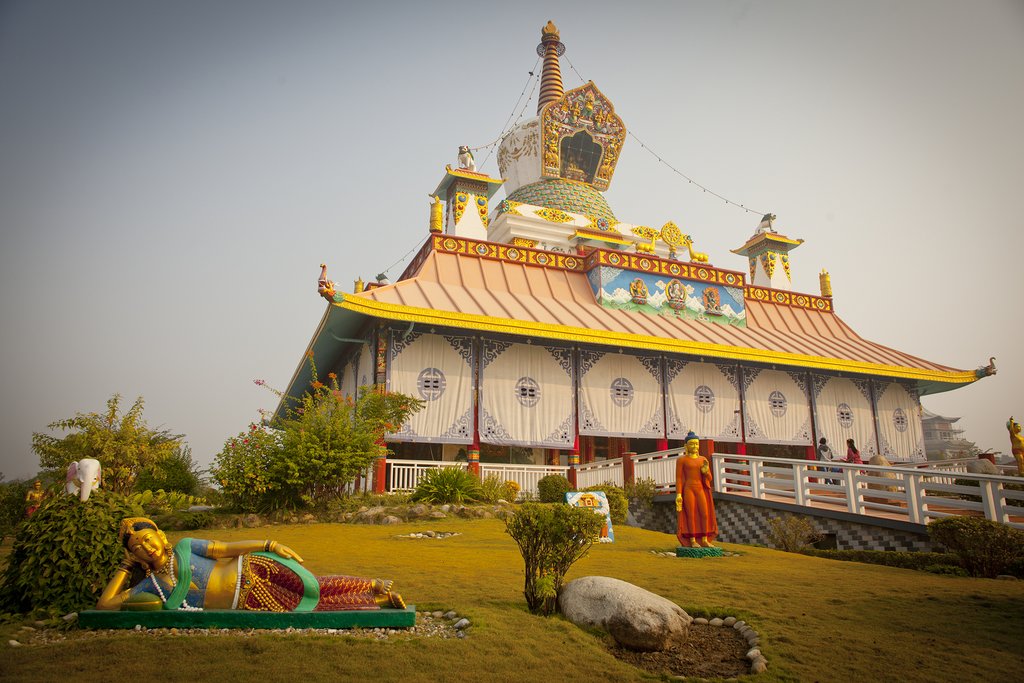
At Plannersy, we describe Lumbini as a place of quiet awe. Walking among ancient monasteries, reflecting ponds, and the sacred Bodhi trees, visitors often experience a profound sense of peace. Lumbini is not just a historical landmark; it is a living center of Buddhist practice and learning, drawing pilgrims and spiritual seekers from all over the globe.
At a Glance — Quick Facts
| Feature | Details |
|---|---|
| Name | Lumbini |
| Location | Rupandehi District, Nepal |
| Religion | Buddhism |
| Annual Visitors | Hundreds of thousands |
| Founded | Circa 623 BCE (birth of Buddha) |
| Architectural Style | Ancient Buddhist and modern monastery styles |
| Key Features | Maya Devi Temple, Ashokan Pillar, Monastic Zone, Sacred Garden |
| Significance | Birthplace of Buddha; UNESCO World Heritage site |
| Best Time to Visit | October–March (cool, dry season) |
| Entry Fee | Approximately NPR 1,000 (~$8 USD) |
History & Cultural Significance
Lumbini is recognized as the birthplace of Prince Siddhartha Gautama, who later became the Buddha. According to tradition, Queen Maya Devi gave birth to him under a sal tree in the sacred garden. Emperor Ashoka of India later erected the Ashokan Pillar here in the 3rd century BCE, marking its significance.
Over the centuries, Lumbini has developed into a global pilgrimage center, with monasteries built by various countries reflecting distinct Buddhist architectural styles. The site symbolizes peace, enlightenment, and intercultural harmony.
Top Highlights (Facts & Distinctions)
- Recognized as the birthplace of Buddha
- Houses the Maya Devi Temple, marking the exact birth site
- The Ashokan Pillar dates back to the 3rd century BCE
- Monastic Zone features international monasteries built by different Buddhist traditions
- Sacred ponds and gardens enhance meditation and spiritual reflection
- UNESCO World Heritage site since 1997
- Pilgrimage circuits guide visitors through the historical and spiritual sites
Major Sights & Experiences
- Maya Devi Temple – Birthplace of Buddha and sacred shrine
- Ashokan Pillar – Ancient stone pillar inscribed by Emperor Ashoka
- Sacred Garden – Peaceful area with Bodhi trees and meditation spaces
- Monastic Zone – Over 30 monasteries from countries such as Thailand, Japan, Myanmar, and Germany
- Puskarini (Holy Pond) – Where Queen Maya is believed to have bathed before giving birth
- International Meditation Centers – Opportunity to experience Buddhist meditation
- Pilgrimage Circuits – Walk the spiritual paths connecting shrines, monasteries, and gardens
Visitor Tips & Planning Advice
Best Time to Visit:
October to March – cool, dry weather with pleasant skies.
Dress Code:
Modest attire recommended; shoulders and knees should be covered.
Footwear:
Shoes are typically removed when entering temples.
Guided Tours:
Recommended to understand historical context and Buddhist traditions.
Crowds:
Peak seasons are Buddhist festivals like Buddha Jayanti; weekdays are quieter.
Photography:
Allowed in most areas, but respect worshippers’ privacy.
Accessibility:
Most areas are flat and accessible; some monastery entrances have steps.
Spiritual Practices:
Visitors can participate in meditation sessions or observe daily rituals.
Nearby Attractions & Experiences
- Kapilavastu – Ancient kingdom associated with Buddha’s early life
- Tilaurakot – Archaeological remains of Siddhartha’s childhood palace
- Siddhartha Art & Culture Museum – Displays related to Buddha’s life
- Gautama Buddha International Airport – Easy access for travelers
- Local Markets – Handicrafts, souvenirs, and traditional Nepalese offerings
Plannersy’s Heartfelt Insight
“Lumbini is a place where history and spirituality gently embrace. Standing in the sacred garden under the shade of ancient trees, one can feel the calm and clarity that inspired the Buddha’s journey to enlightenment. It’s a pilgrimage for the soul, not just the body.”
Ideal For
- Buddhist pilgrims and spiritual seekers
- Cultural and history enthusiasts
- Families exploring Nepalese heritage
- Solo travelers seeking peace and reflection
- Photography lovers capturing serene landscapes and temples
Frequently Asked Questions (FAQs)
1. Is Lumbini open to non-Buddhists?
Yes – visitors of all faiths are welcome.
2. How long should I spend at Lumbini?
2–4 hours for the main sites; a full day to explore monasteries and gardens.
3. Is there an entry fee?
Yes – around NPR 1,000 (~$8 USD) for international visitors.
4. Can I participate in meditation sessions?
Yes – many monasteries offer meditation experiences.
5. When is the best season to visit?
October–March (cool, dry season).
6. Are guided tours available?
Yes – local guides provide historical and spiritual context.
7. Is photography allowed?
Yes, respecting worshippers’ privacy.
8. Are there dining options nearby?
Yes – simple cafes and guesthouses are available near the site.
9. Is it suitable for children?
Yes – family-friendly and safe environment.
10. Are there accommodation options nearby?
Yes – hotels and guesthouses are available in Lumbini and nearby towns.
Exploring the World’s Most Visited Religious Places: A Journey of Faith and Wonder
Visiting the world’s most revered religious sites is more than a sightseeing experience – it is a journey into the heart of human devotion, history, and culture. From the serene terraces of Borobudur to the golden reflections of Shwedagon Pagoda, from the spiritual embrace of Meiji Shrine to the awe-inspiring grandeur of Saint Peter’s Basilica, each site tells a story of faith, resilience, and humanity’s pursuit of meaning.
At Plannersy, we believe these sacred places invite every traveler to pause, reflect, and connect – not just with the divine, but also with the rich tapestry of traditions, artistry, and communities that have flourished around them. Whether you are a pilgrim seeking spiritual fulfillment, a history enthusiast exploring centuries-old architecture, or a curious traveler immersing yourself in global cultures, these sites offer experiences that leave a lasting imprint on the soul.
Every temple, basilica, pagoda, and shrine carries a lesson in patience, humility, and reverence. Standing before these monuments, witnessing rituals, listening to chants, and observing centuries of devotion, one cannot help but feel a deep sense of connection – to history, to humanity, and to oneself.
So, as you plan your next journey, remember: these sacred destinations are more than places to visit; they are spaces to experience, reflect, and be inspired. Traveling through them is a celebration of faith, artistry, and the enduring human spirit – an invitation to see the world through the lens of wonder and warmth that Plannersy cherishes.